


Foreword
Nutritional health supplements, especially those available with over-the-counter (OTC) options, have an obvious allure that is difficult to resist. Just imagine, a pill taken with your morning coffee that promises to boost your energy, sharpen your focus, or even slow down aging. These oral OTC supplements have high accessibility with minimal administration effort. Any potential advantages gained (even if only marginal) from such supplements are more tempting than ever in our fast-paced, "always-on" society. But here's the catch: the supplement industry is like the “Wild West” —largely unregulated and rife with bold claims that more often than not lack scientific credibility. While the supplement industry is a topic that deserves its own dedicated deep dive (I will give one in the future), it’s important to approach individual supplements with skepticism and evaluate these on a case-by-case basis. This is particularly true in the absence of clinical evidence and quality control data on the specific supplement product.
Caveats aside, I still find the supplement industry interesting! Lately, my curiosity has been piqued by the buzz surrounding anti-aging and longevity supplements, specifically those involving Nicotinamide Adenine Dinucleotide (NAD+). Prominent figures in the anti-aging community, such as Harvard’s David SinClair and BluePrint’s Bryan Johnson have been vocal advocates of NAD+, even describing their use in daily supplement protocols. I’m intrigued by the potential and hype surrounding such a simple small molecule! Therefore, I've decided to deviate from my usual format of dissecting a specific research article, to instead, take a comprehensive Deep Dive into the world of NAD+. Herein, this article will introduce the biological function of NAD+, the claims made about its supplemental benefits, the reasons for skepticism, and the exciting next steps in this field.
Introduction
Nicotinamide Adenine Dinucleotide (NAD+) is an indispensable coenzyme that serves as a cornerstone of cellular metabolism. For those unfamiliar, a coenzyme is a nonprotein, small molecule, that is necessary for enzymatic function. It is present in every living cell and exists in two primary forms: NAD+ (oxidized) and NADH (reduced). These two forms create a dynamic redox pair, facilitating countless unique enzymatic reactions essential for life. A few key important examples of NAD+ functions are as a crucial cofactor for sirtuins, which regulate cellular aging, and poly(ADP-ribose) polymerases (PARPs), involved in DNA repair and gene expression. Additionally, NAD+ plays an integral role in the mitochondria (as we learned in school, the ‘powerhouse of the cell’), where it is essential for the electron transport chain that converts nutrients into adenosine triphosphate (ATP), the primary energy currency of the cell (Verdin, 2015; Rajman et al., 2018).
Now that we know how vital NAD+ is for cellular function, what happens when the level is insufficient in the body? NAD+ deficiency can have severe consequences, leading to metabolic disorders, mitochondrial dysfunction, and even cell death. Reduced levels of NAD+ impair all the critical functions, such as what was mentioned above, e.g., the body's ability to repair damaged DNA, leading to genomic instability. This deficiency also hampers cellular signaling pathways and disrupts the balance of oxidative and reductive reactions, making cells more susceptible to oxidative stress (disrupting their repair mechanism). In the brain, inadequate NAD+ levels have been linked to neurodegenerative diseases like Alzheimer's and Parkinson's which we discuss in more detail in other articles.
What is happening to the body’s natural NAD+ reservoirs?
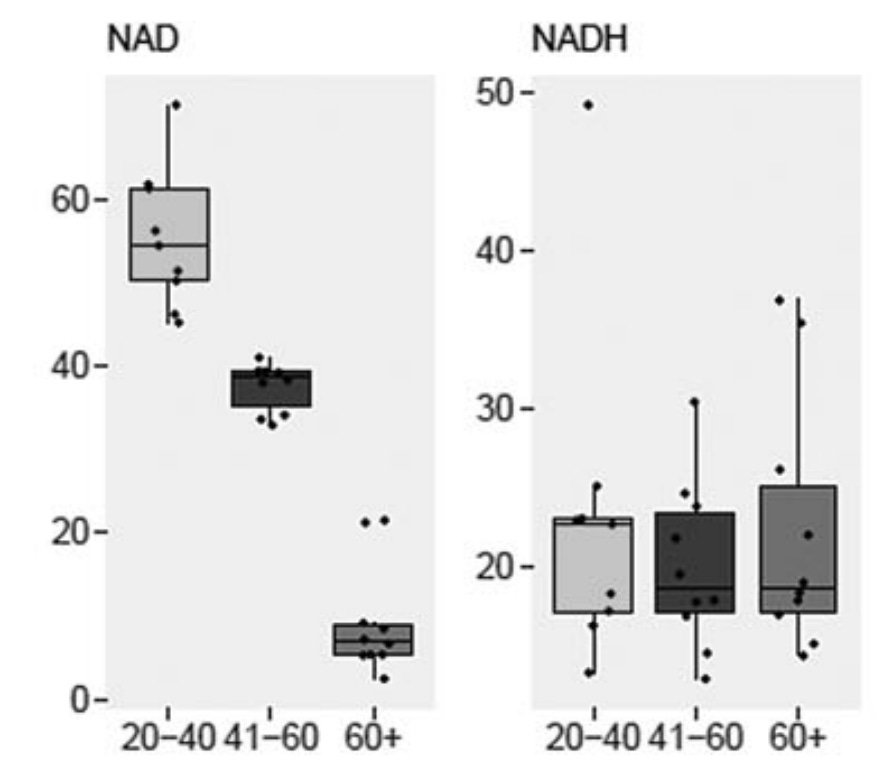
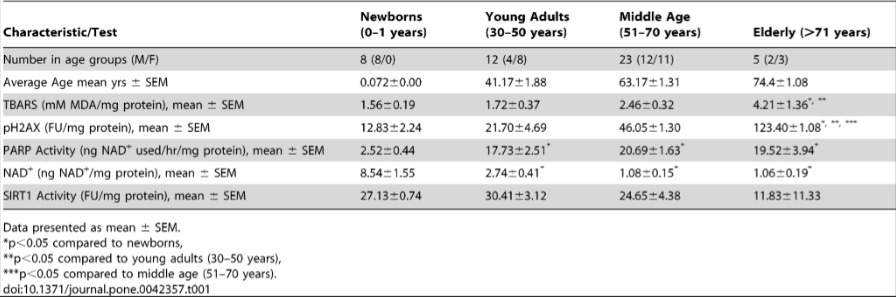
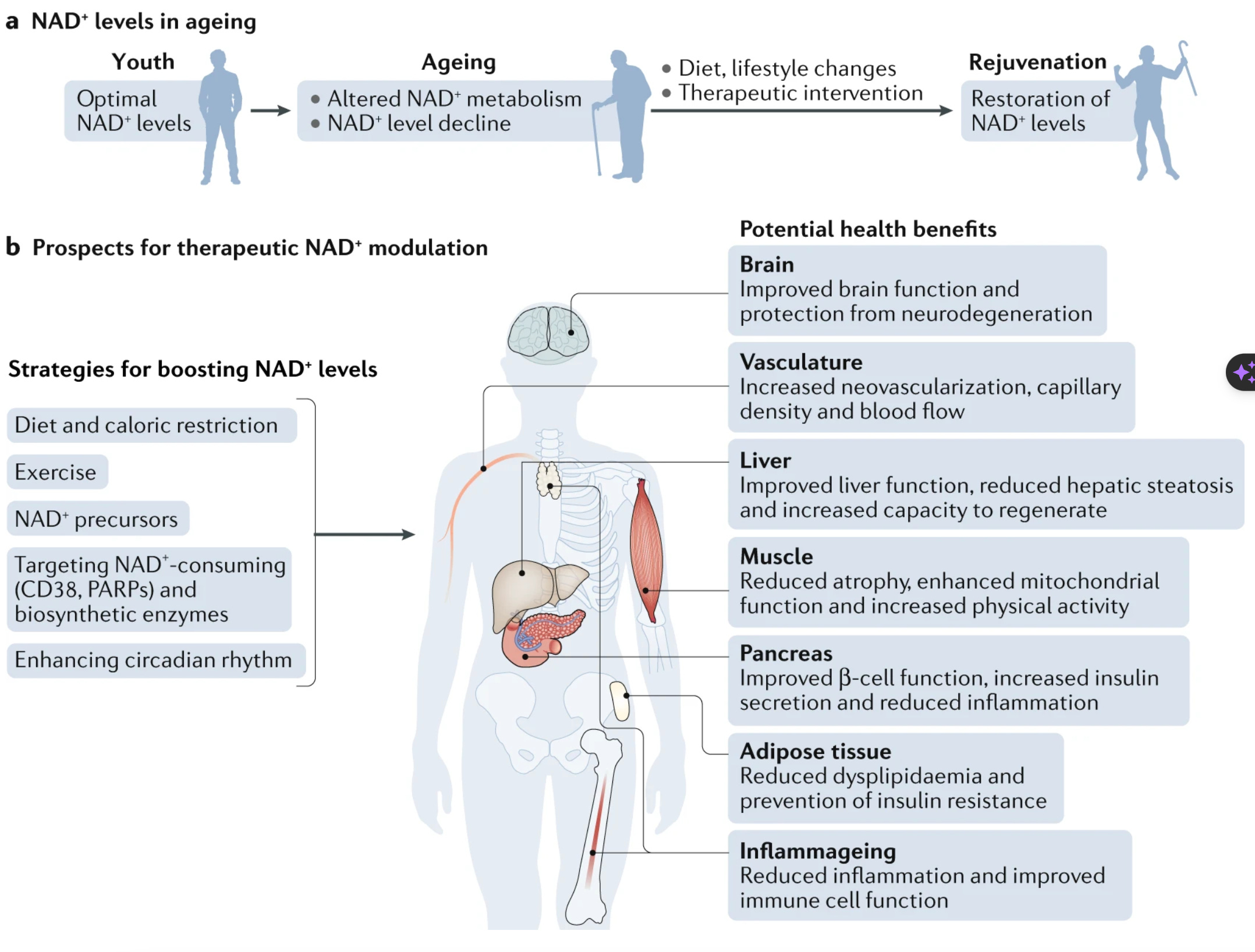
There are several reasons NAD+ may be reduced in the body, the primary being a consequence of aging. As we age, the natural reservoirs of NAD+ in our bodies start to deplete (Figure 1 and Table 1). This phenomenon is closely associated with a host of age-related diseases, including neurodegenerative conditions, cardiovascular diseases, and metabolic syndromes. This decline in NAD+ levels has been linked to reduced cellular function, increased susceptibility to oxidative stress, and impaired tissue repair (Massudi et al., 2012; Imai & Guarente, 2014). This relation between disease (particularly age-related) and depletion of NAD+ has spurred interest in precursor molecules like nicotinamide mononucleotide (NMN) and nicotinamide riboside (NR), which can be converted into NAD+ in the body. Therefore, these precursor molecules may serve as potential therapeutic agents for combating age-related decline (Braidy et al., 2019).
Potential Claim(s) and Benefit
There are a few potential claims for NAD-related supplements that can be derived from first principles:
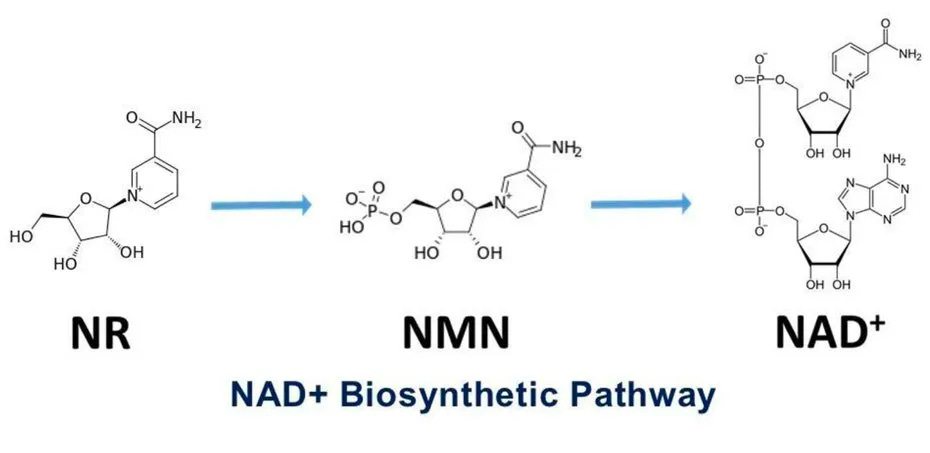
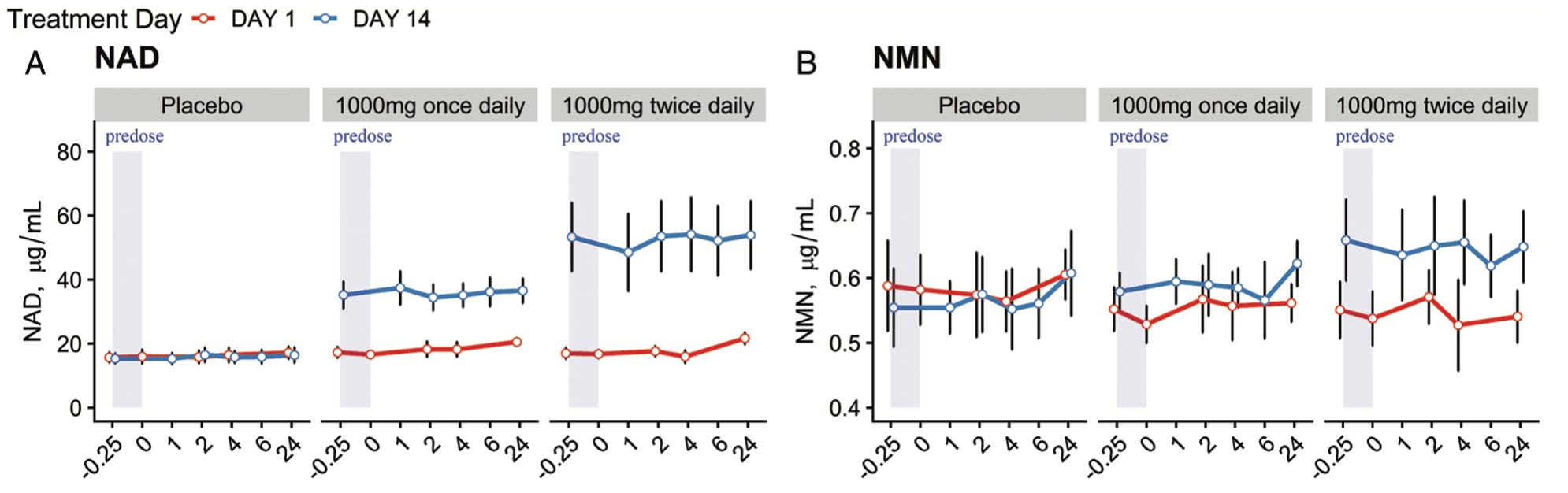
NAD supplements can be used to restore depleted NAD+ in the body. For any downstream efficacy, we must first be able to rescue or elevate NAD+ in the body. NAD supplements are typically formulated as precursor molecules (Figure 2). These precursor molecules (NR or NMN) are claimed to convert to NAD+. Currently, the data for this looks fairly strong from preclinical and clinical data. This year, a study was recently released on the drug ‘MIB-626’, an oral formulation of b-nicotinamide mononucleotide (Pencina, 2023). This was conducted by a team from Harvard Medical School, Brigham and Women’s Hospital. The objective was to determine the pharmacokinetics and pharmacodynamics of MIB-626, i.e., how the drug moves through the body and the action of the drug. The results show this was well-tolerated with no adverse events related to the drug. Further, blood NMN concentration at Day 14 were significantly higher in compared to the placebo group, with dose-related increases in blood NAD levels (Figure 3). The punchline - this study showed NMN dosing increased NAD+ and could facilitate the design of future efficacy trials in disease conditions.
The restoration of NAD+ will alleviate disease symptoms and/or promote longevity. NAD supplements are often marketed as anti-aging solutions. The primary claim is that by increasing NAD+ levels, these supplements can combat age-related decline in cellular function, improve energy metabolism, and enhance overall vitality. Some products even assert that they can extend lifespan, although this claim is often based on animal studies rather than human trials (Mouchiroud, 2013). The idea is rooted in scientific findings that NAD+ levels decline with age, affecting various cellular processes including DNA repair, mitochondrial function, and cellular metabolism (Verdin, 2015; Rajman, 2018).
General increases in NAD+ will have general advantages for normal individuals. Additionally, NAD supplements claim to improve cognitive function, reduce inflammation, and protect against neurodegenerative diseases. Some brands also purport to improve muscle function, enhance endurance, and speed up recovery after exercise. These claims are often based on the role of NAD+ as a cofactor for sirtuins, a family of enzymes involved in cellular stress resistance and metabolic regulation (Imai & Guarente, 2014). However, it's important to note that while the role of NAD+ in cellular metabolism is well-established, the efficacy of NAD supplements in humans is still a subject of ongoing research, and many of these claims have not been conclusively proven (Braidy et al., 2019).
Impact
This section really speaks for itself; if the claims about NAD+ supplements hold true, the implications could be transformative for both individual well-being and societal health. A shift from treating to preventing age-related diseases could improve quality of life in later years, potentially reducing healthcare costs. Moreover, the general population could experience enhanced cognitive and physical performance, leading to a more productive and active society. However, these are bold claims that require some nuanced review.
Critical Review
There are many reasons to have a healthy dose of skepticism ranging from the regulatory environment of the supplement industry to the lack of solid clinical evidence in humans. Let’s review a few of these.
Regulatory oversight is non-existent in the sketchy supplement industry. Supplement ads appear on the internet and our television all the time. We see them constantly advertising to anyone interested in fitness, general wellness, etc. When going to a natural pharmacy, the shelves are full of these supplements. Since these are not regulated by the FDA, how do we know which ones are actually backed by clinical evidence? Furthermore, how do we know that they contain the ingredients that they claim and in the amounts that they claim? For example, just because creatine monohydrate has been demonstrated to improve recovery in athletes, how do I know I am getting the same quality ingredient?
Limited human trials exist on the efficacy of these. Much of the evidence supporting the benefits of NAD+ boosting comes from animal studies. While these studies are promising, they are only early indicators. Clinical trials in humans are limited, and many are still in the early stages (Braidy et al., 2019).
Bioavailability and Absorption of supplements will determine if they’re having an impact. Even if NAD+ itself has proven benefits, the body's ability to absorb and utilize it—or its precursors—from supplements is not guaranteed. Some studies indicate that not all forms of NAD+ precursors are equally bioavailable, affecting their potential efficacy (Trammell et al., 2016).
Do we actually need to supplement NAD+? Vitamin B3, a precursor to NAD+, is already present in many multivitamins and various food sources. This raises the question of whether specialized NAD+ supplements offer any advantages over a balanced diet and lifestyle.
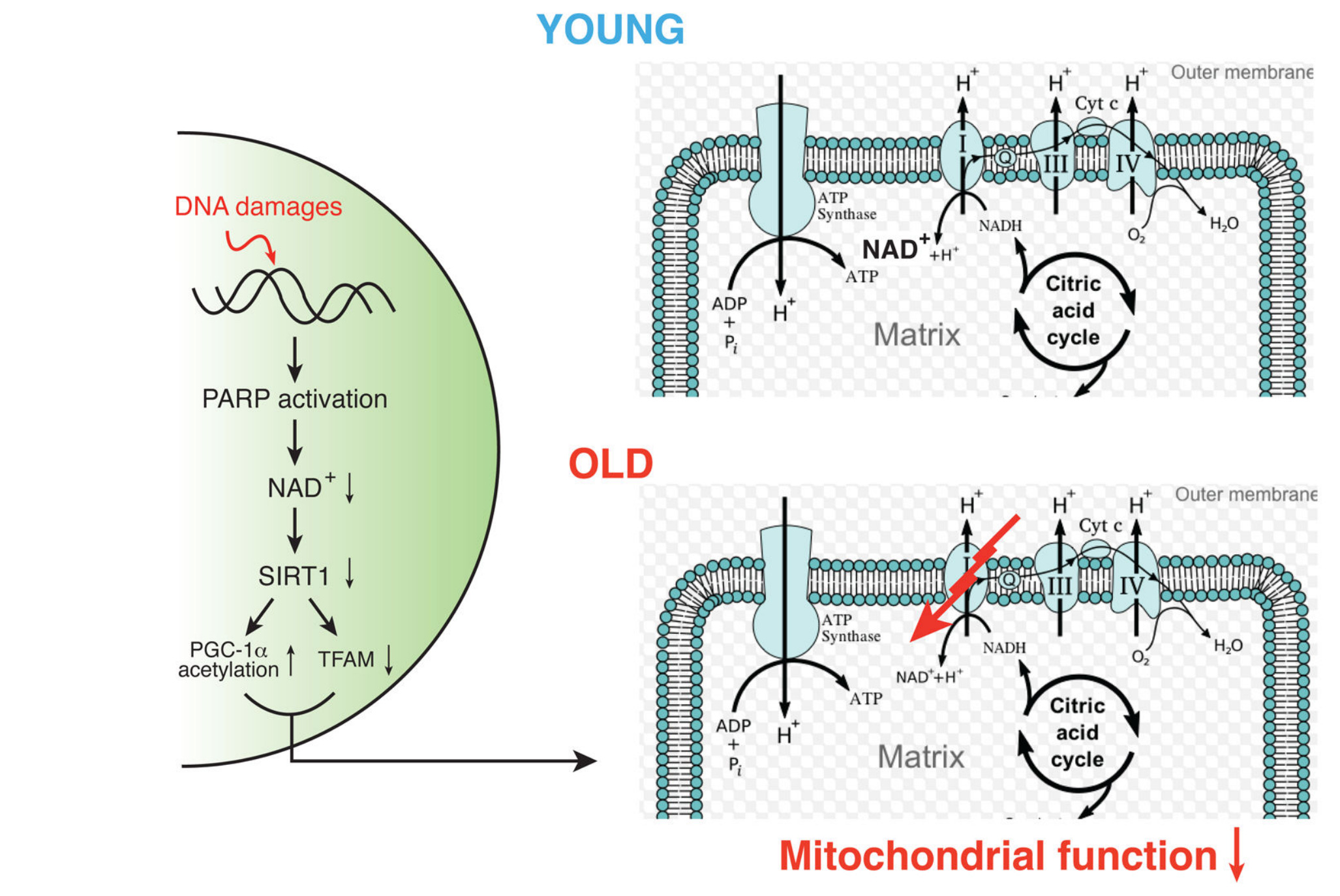
My own question: why do NAD+ levels reduce with age while NADH levels remain stationary? Interestingly, while NAD+ depletes with age and disease, NADH appears to remain at the same level throughout life (Figure 3 and Table 1). It is unclear why this should be since NAD+ and NADH should maintained in a dynamic equilibrium as they are a redox pair. It would appear there is a disruption to this regeneration process. The best answer I could find to this came from a paper (Imia, 2014)), in the mitochondria, the electron transport via NADH generates NAD+, however, this may decline with age and the accumulation of DNA damage (Figure 5).”
Next Steps
The field of NAD+ research is at a critical juncture, with promising preliminary results but a need for more rigorous investigation. The key next steps should include well-designed, large-scale, randomized controlled trials in humans to validate the safety and efficacy of NAD+ precursors like NMN and NR in various age-related conditions. While initial trials have been completed (as mentioned earlier), more extensive trials should aim to establish optimal dosages, long-term safety profiles, and specific therapeutic applications. Additionally, mechanistic studies are needed to understand the exact pathways through which NAD+ and its precursors exert their effects, as well as any potential side effects or contraindications. Collaboration between academic researchers, clinicians, and industry stakeholders will be essential for translating scientific discoveries into practical therapies that can benefit the aging population.
How you can support this Substack
These newsletters take a significant amount of effort to put together and are totally for the benefit of the reader. If you find these explorations valuable, there are multiple ways to show your support:
Engage: Like or comment on posts to join the conversation.
Subscribe: Never miss an update by subscribing to the Substack.
Subscribed
Share: Help spread the word by sharing posts with friends directly or on social media.
References
Braidy, N., Berg, J., Clement, J., Khorshidi, F., Poljak, A., Jayasena, T., ... & Sachdev, P. (2019). Role of Nicotinamide Adenine Dinucleotide and Related Precursors as Therapeutic Targets for Age-Related Degenerative Diseases: Rationale, Biochemistry, Pharmacokinetics, and Outcomes. Antioxidants & redox signaling, 30(2), 251-294.
Covarrubias, A.J., Perrone, R., Grozio, A. and Verdin, E., 2021. NAD+ metabolism and its roles in cellular processes during ageing. Nature Reviews Molecular Cell Biology, 22(2), pp.119-141.
Chiarugi, A., Dölle, C., Felici, R., & Ziegler, M. (2012). The NAD metabolome—a key determinant of cancer cell biology. Nature Reviews Cancer, 12(11), 741-752.
Clement, J., Wong, M., Poljak, A., Sachdev, P. and Braidy, N., 2019. The plasma NAD+ metabolome is dysregulated in “normal” aging. Rejuvenation research, 22(2), pp.121-130.
Imai, S., & Guarente, L. (2014). NAD+ and sirtuins in aging and disease. Trends in cell biology, 24(8), 464-471.
Massudi, H., Grant, R., Braidy, N., Guest, J., Farnsworth, B., & Guillemin, G. J. (2012). Age-associated changes in oxidative stress and NAD+ metabolism in human tissue. PloS one, 7(7), e42357.
Mouchiroud, L., Houtkooper, R.H., Moullan, N., Katsyuba, E., Ryu, D., Cantó, C., Mottis, A., Jo, Y.S., Viswanathan, M., Schoonjans, K. and Guarente, L., 2013. The NAD+/sirtuin pathway modulates longevity through activation of mitochondrial UPR and FOXO signaling. Cell, 154(2), pp.430-441.
Pencina, K.M., Lavu, S., Dos Santos, M., Beleva, Y.M., Cheng, M., Livingston, D. and Bhasin, S., 2023. MIB-626, an oral formulation of a microcrystalline unique polymorph of β-nicotinamide mononucleotide, increases circulating nicotinamide adenine dinucleotide and its metabolome in middle-aged and older adults. The Journals of Gerontology: Series A, 78(1), pp.90-96.
Rajman, Luis, Karolina Chwalek, and David A. Sinclair. "Therapeutic potential of NAD-boosting molecules: the in vivo evidence." Cell metabolism 27.3 (2018): 529-547.
Trammell, S. A., Schmidt, M. S., Weidemann, B. J., Redpath, P., Jaksch, F., Dellinger, R. W., ... & Brenner, C. (2016). Nicotinamide riboside is uniquely and orally bioavailable in mice and humans. Nature communications, 7, 12948.
Verdin, E. (2015). NAD+ in aging, metabolism, and neurodegeneration. Science, 350(6265), 1208-1213.
Convenience is the only way to get people to care about their health. As unfortunate as this is, at least we'll have a supplement for those who truly can't exercise or have some other condition that prevents them from either sleeping or exercising.
The biggest issue is the salvage pathway which gets reduced with age but does increase with exercise. In addition, the increase of CD38 as we age depletes NAD+ as we age, so taking in Apigenin and Quercetin helps fill those receptors instead of NAD+.
The form of B3 does matter as well.