


Happy Monday Evening, Readers. Let’s be relentless this week!
Before we get into biotech, a bit of culture news—last night was Super Bowl LIX. For my non-American readers, this is the championship game for American football. As a note, I’m a huge football fan. The game was played between my favorite team, the Philadelphia Eagles, and the Kansas City Chiefs. Watching your favorite team win in a revenge game is truly something special—more than likely a once-in-a-lifetime event.
Okay, that’s nice and all, but what does it have to do with biotech, AI, or this newsletter in general? This isn’t directly related, but I want to share why I love this sport.
To me, Football is the ultimate team sport. It’s a physically and mentally demanding game centered around moving a ball up and down the field to score points. Each play features a series of carefully choreographed collisions, blocks, and routes from the offense, mirrored by the defense. Each team disguises their moves to outwit their opponent. It’s a game of strategy and resilience, where each team imposes its will upon the other in a battle over the movement of the ball. It’s no wonder that corporate boardrooms across America frequently borrow football idioms and metaphors—‘who is quarterbacking,’ ‘where are we moving the ball,’ ‘let’s get a touchdown,’ ‘where is our strongest matchup,’ ‘any given Sunday.’
To some degree, American football has something for everyone. But if nothing else, it’s a cultural event where we can find common ground in a time when shared experiences feel increasingly rare. It’s a good reminder of the value of collective moments.
With that, let’s dive into this week’s biotech updates!
NASA’s Mission to Asteroid Found Key Ingredients of Life
eGenesis Announces 2nd Pig Kidney Transplant into Human
AAV-Based CRISPR Editing of Skeletal Muscle Using NanoCas
Heavy Cannabis Use Linked to Lower Brain Activation in Working Memory
NASA’s Mission to Asteroid Found Key Ingredients of Life
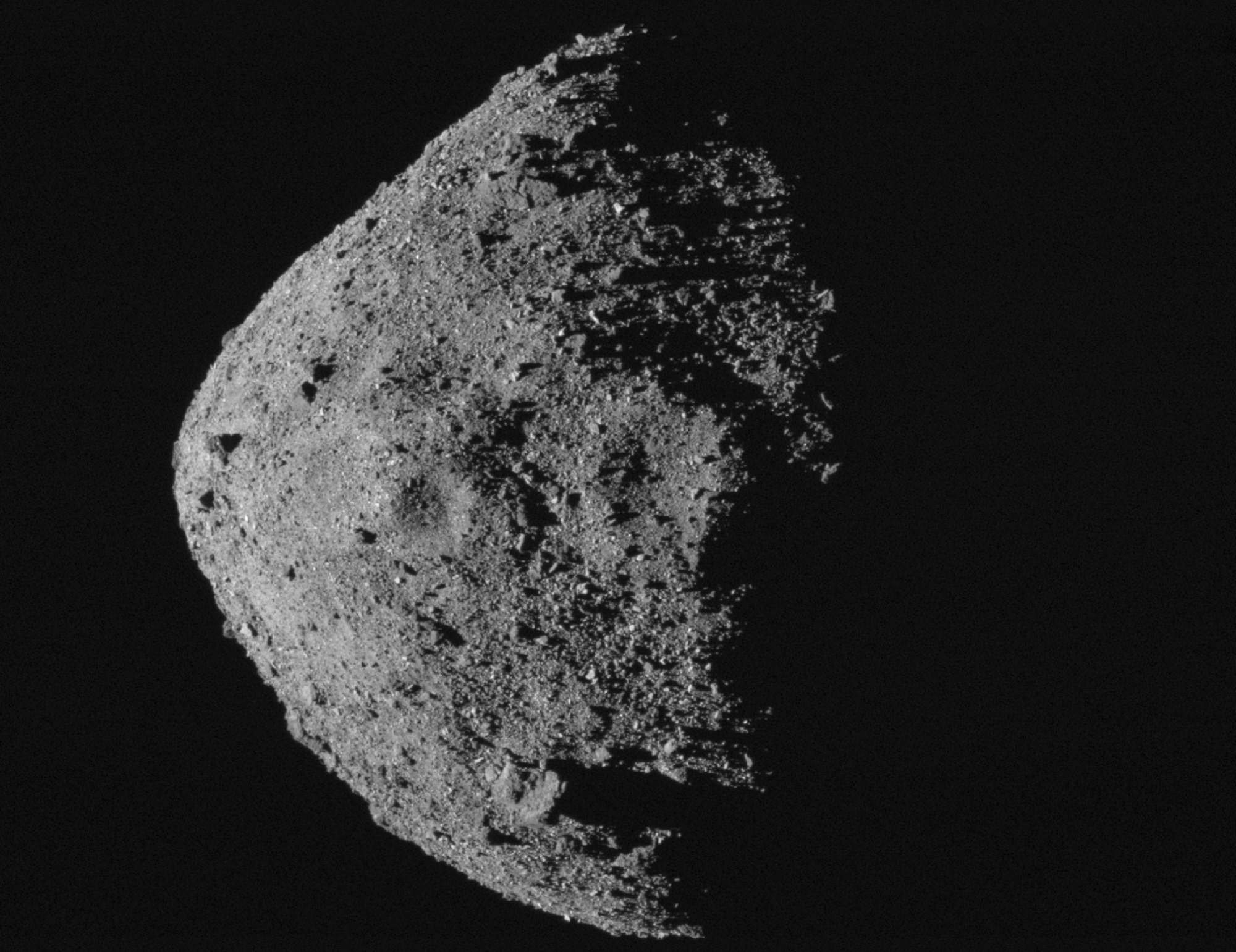
Have you ever wondered what would be found by sampling the soil of an asteroid orbiting the galaxy? You’re probably also wondering what in the world this has to do with biotechnology. Or maybe you’ve read the headline and already know where this is going. Let’s go into the full story and appreciate this marvel together.
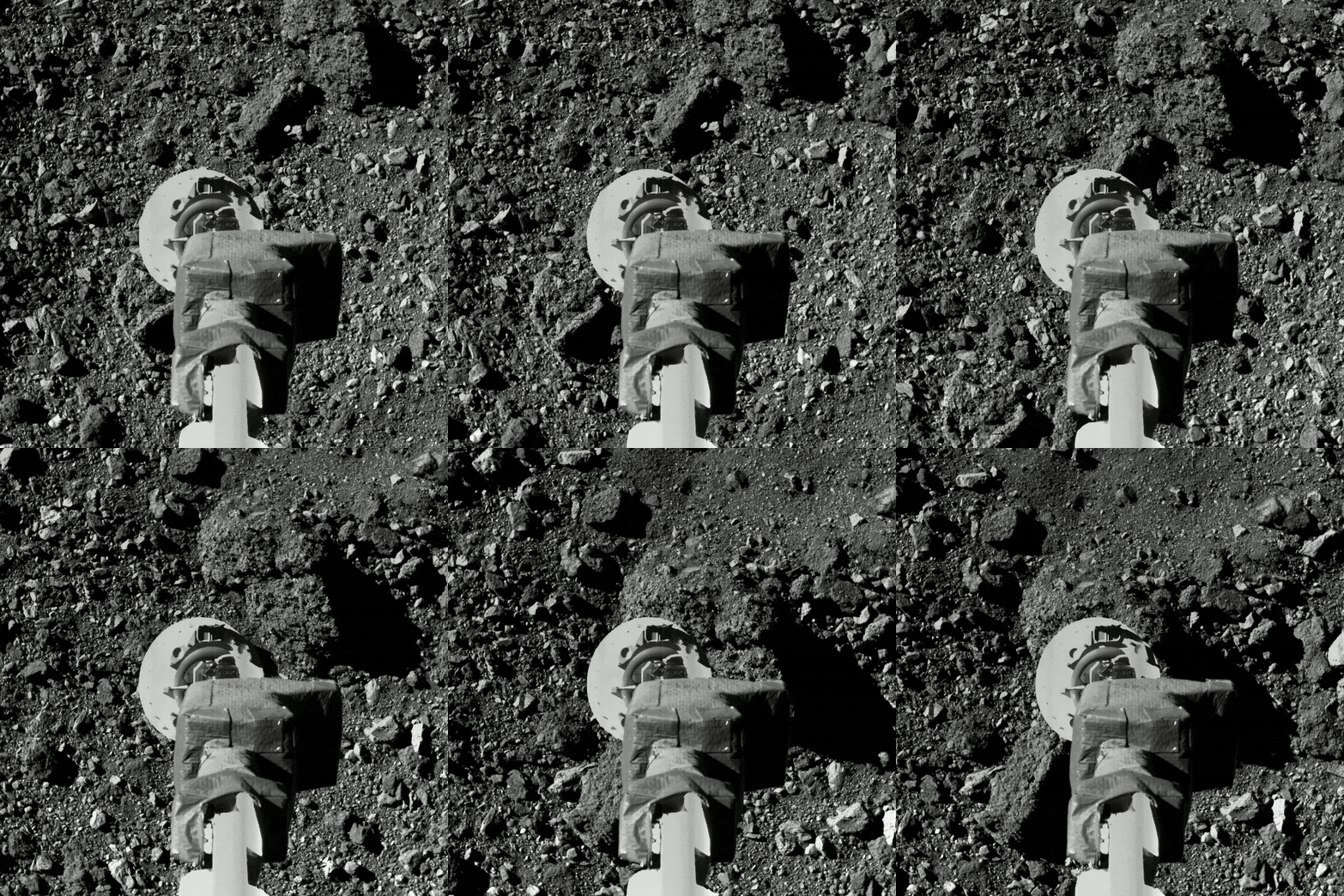
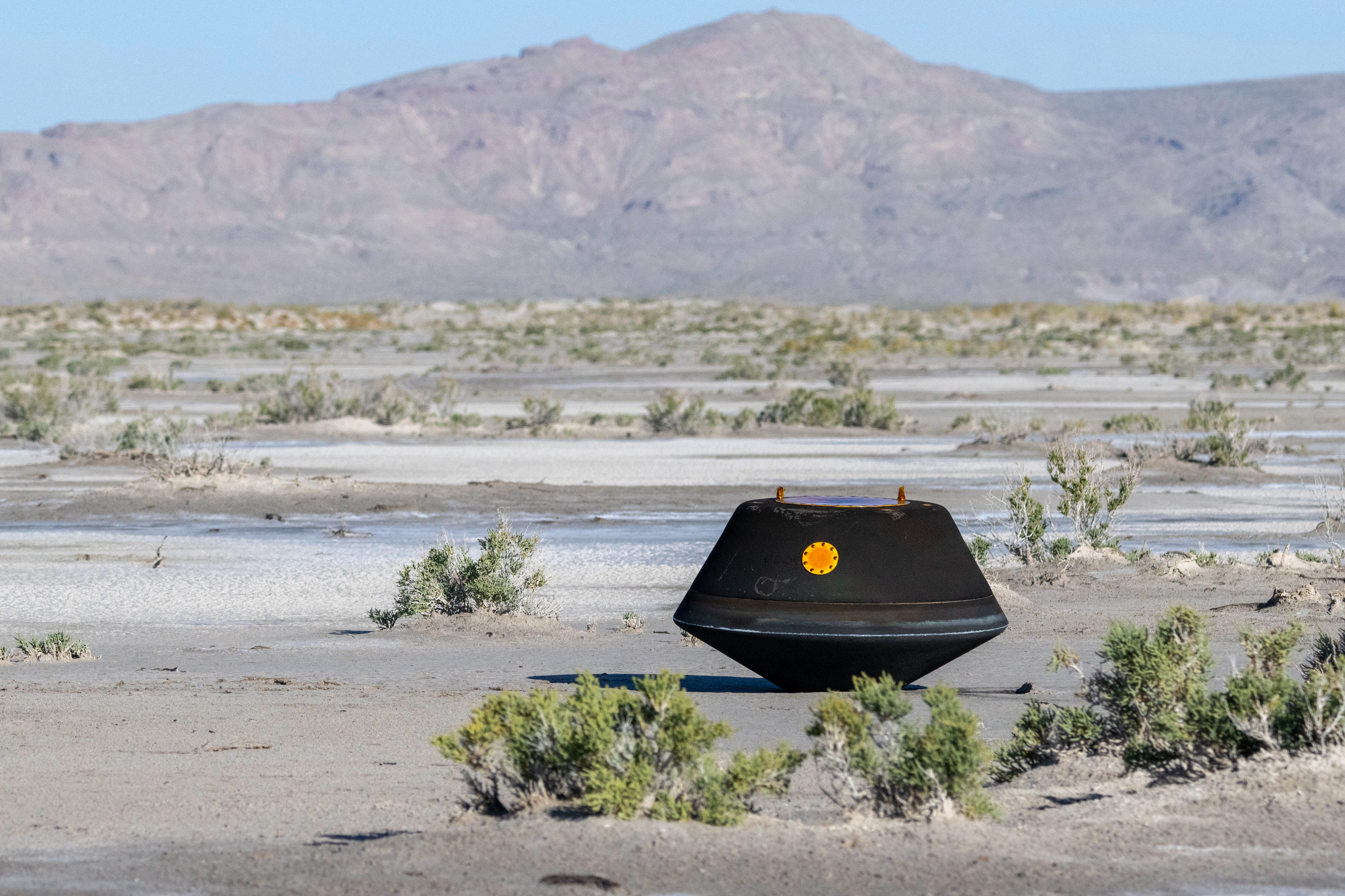
In 2016, NASA launched the OSIRIS-REx mission to Bennu, a near-Earth asteroid. After 4 long years of travel, the spacecraft managed to land on this tiny rock flying through the vacuum of space at 63,000 miles per hour. It captured stunning images and collected soil samples for return to Earth. In late 2023, OSIRIS-REx completed its long journey home and dropped off its payload. This marked the first U.S. mission to collect a sample from an asteroid and return it to Earth. But what exactly did we find?
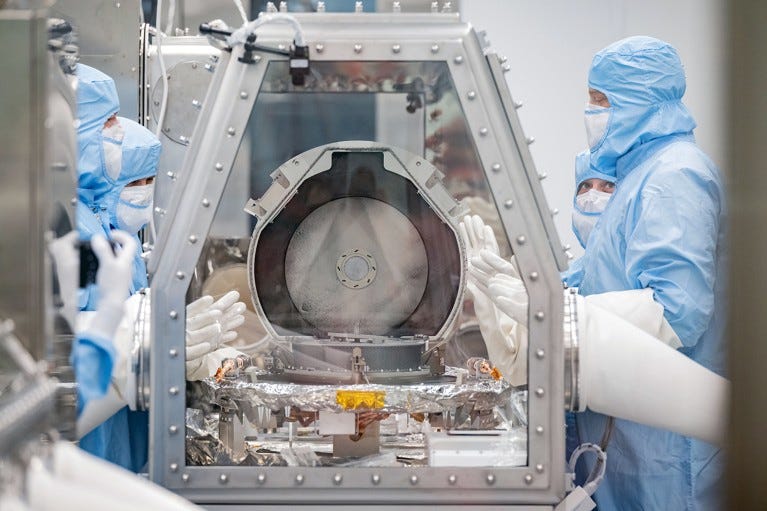
NASA collaborates with several universities to analyze these samples, and multiple publications have reported findings. The most exciting results, from a biological perspective, revealed that Bennu’s samples contained 14 of the 20 amino acids that serve as the fundamental building blocks of proteins and all five nucleic bases—the essential components of DNA and RNA (Glavin et al., 2025). Interestingly, the left- and right-handed stereoisomers were found in nearly equal amounts. On Earth, life exclusively uses left-handed amino acids, making this discovery unprecedented. Previous analyses of meteorites that crashed to Earth have faced contamination issues, as atmospheric entry heats them to extreme temperatures. This is the first uncontaminated confirmation of organic molecules in space.
It’s difficult to overstate the significance of this discovery. To my knowledge, complex molecules—particularly life’s building blocks—have not been discovered outside Earth until now. Many researchers argue that the probability of large molecule formation by chance is close to zero. A paper we previously reviewed on ‘General Assembly Theory’ suggests that specific environmental conditions could drive the accumulation of these molecules, increasing the likelihood of life beyond our planet. This discovery also lends credence to the idea of panspermia, the theory that life’s essential ingredients may be distributed between planets through asteroid and comet impacts.
This topic came as a suggestion of one of our readers, Nathan Slake, who is also an excellent fiction writer. You can check out his work in the link above.
eGenesis Announces 2nd Pig Kidney Transplant into Human
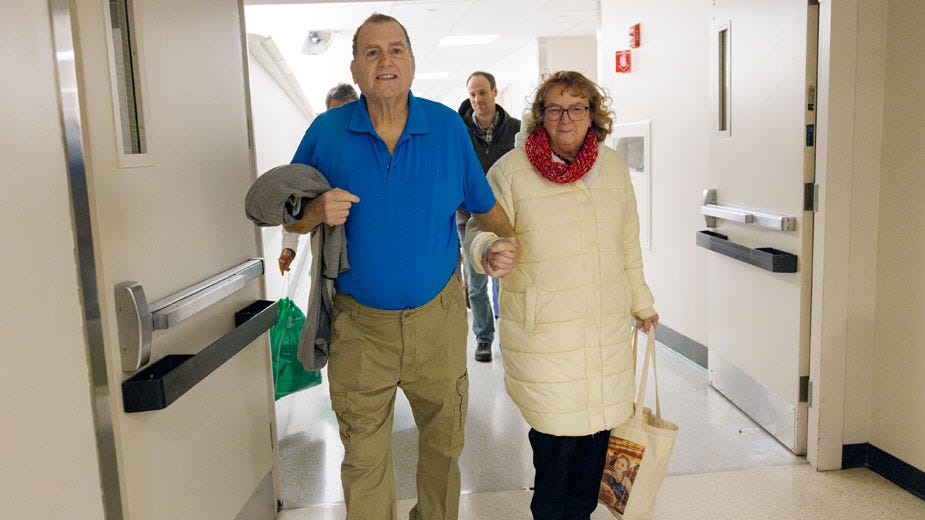
Massachusetts General Hospital (MGH) has successfully performed its second transplant of a genetically engineered pig kidney into a living human, marking a critical step forward in xenotransplantation. The recipient, 66-year-old Tim Andrews, had been on dialysis for over two years due to end-stage kidney disease (ESKD) and faced a long wait time because of his O-blood type, which significantly reduces the chances of receiving a donor kidney. The transplant was performed on January 25, 2025, under the FDA’s Expanded Access Protocol, and Andrews was discharged from MGH on February 1, 2025, with the kidney functioning as expected. He is now off dialysis for the first time in over two years.
The transplanted kidney, called EGEN-2784, was provided by eGenesis and incorporates three classes of genetic modifications to improve compatibility and long-term function in humans. These include removal of three glycan antigens to prevent hyperacute rejection, insertion of seven human transgenes to regulate immune response and blood compatibility, and inactivation of porcine endogenous retroviruses (PERVs) to eliminate potential viral risks. This second transplant builds upon MGH’s historic first xenotransplant in March 2024 and is part of a three-patient FDA-authorized study. While long-term success remains to be seen, researchers hope these engineered organs could one day provide a sustainable alternative to human donor kidneys, helping to alleviate the global organ shortage, where over 100,000 people in the U.S. remain on transplant waiting lists.
Mammoth Biosciences Shows Off AAV-Based CRISPR Editing of Skeletal Muscle Using NanoCas
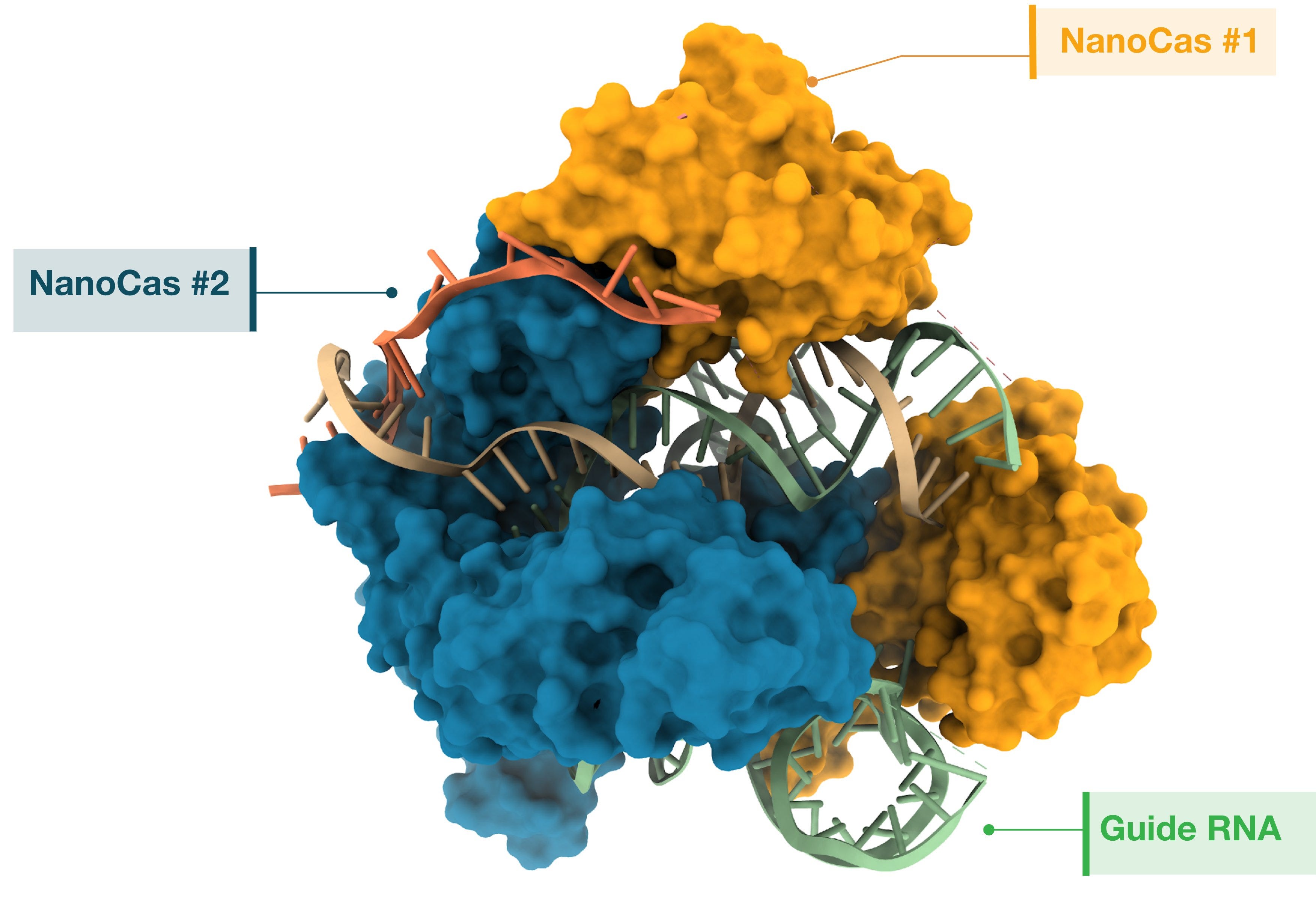
CRISPR gene editing is a powerful tool for modifying DNA, but getting it to work in certain parts of the body, like muscles, has been challenging. Scientists can easily target the liver using lipid nanoparticles, but muscles and other tissues are harder to reach. The reason for this difficulty is that most CRISPR enzymes, like Cas9 and Cas12a, are too large to fit inside vehicles like a single adeno-associated virus (AAV), which is a common delivery vehicle for gene therapies. Some researchers have tried using two AAVs instead, but this approach is less efficient and more complicated. As a result, diseases like Duchenne muscular dystrophy (DMD), which could benefit from gene editing, have remained difficult to treat.
A new study from Mammoth Biosciences introduces NanoCas, an ultracompact CRISPR enzyme that enables efficient skeletal muscle editing using a single AAV vector. At just ~450 amino acids—roughly one-third the size of Cas9—NanoCas is small enough to fit within a single AAV, allowing for streamlined delivery without the complications of dual-vector systems. Researchers tested NanoCas in cynomolgus macaques, where it achieved up to 30% gene editing efficiency in skeletal muscle, a breakthrough for single-AAV CRISPR therapies. Unlike prior approaches, which struggled with recombination inefficiencies, NanoCas enables precise in vivo editing in large animals with low off-target activity in liver and cardiac tissue.
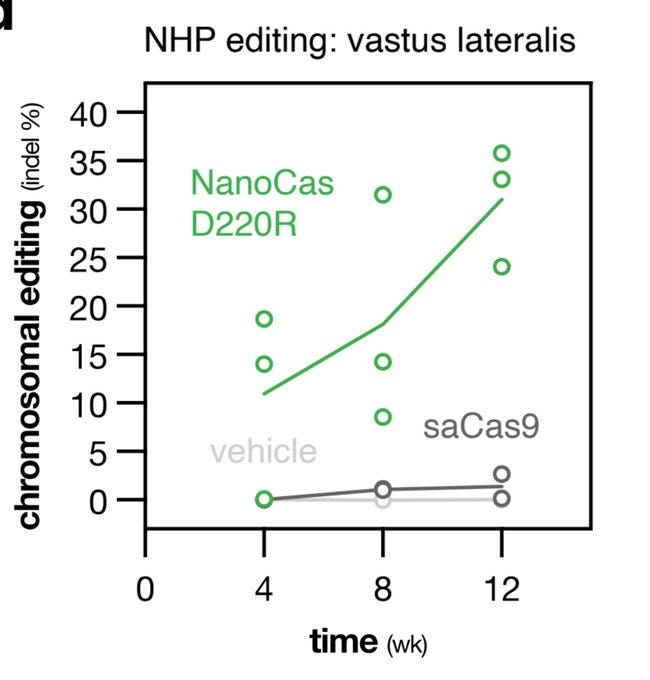
To develop NanoCas, researchers screened 176 smaller CRISPR enzymes and selected the most promising candidate. Early versions had trouble binding to DNA, so the team made small adjustments to improve its targeting ability. One key tweak, a change to a single amino acid (D220R), helped restore strong editing performance. These refinements allowed NanoCas to edit muscle cells consistently across different tissue sites, including the quadriceps, gastrocnemius, and biceps. Over time, editing efficiency improved, reaching 10–30% by eight weeks, with minimal unintended effects on other organs.
NanoCas’s compact size also makes it compatible with emerging gene-editing technologies, including base editing, epigenetic modification, and reverse transcriptase editing. These techniques allow for precise changes without introducing double-strand breaks, reducing risks associated with traditional CRISPR approaches. While the study suggests that NanoCas's smaller size could facilitate non-viral delivery methods, such as lipid nanoparticles (LNPs), this remains speculative and requires further experimental validation. By enabling efficient CRISPR editing in skeletal muscle using a single AAV, NanoCas represents a significant step toward in vivo gene therapies that are more scalable, precise, and accessible.
Heavy Cannabis Use Linked to Lower Brain Activation in Working Memory
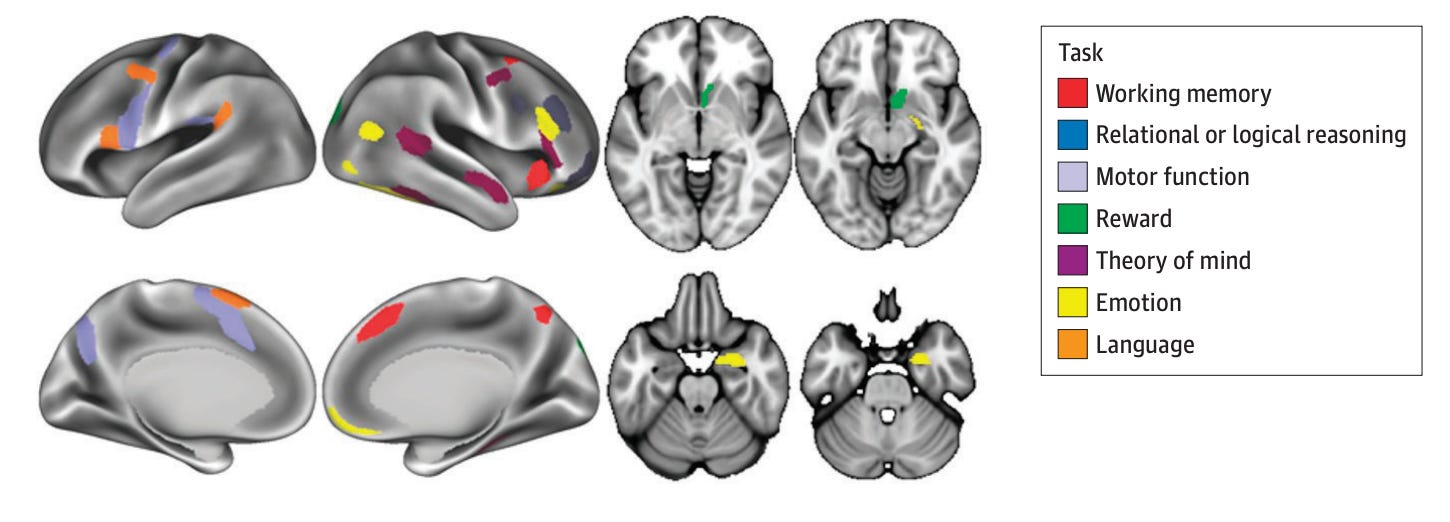
As cannabis legalization continues to expand, researchers are working to understand its long-term impact on brain function. While acute cannabis use is known to cause temporary cognitive impairments, the extent to which these effects persist over time remains unclear. A new study published in JAMA Network Open examines how both recent and lifetime heavy cannabis use influence brain activity during cognitive tasks, providing some of the strongest evidence yet that chronic use is associated with lasting changes in neural function (Gowin et al., 2025).
The study analyzed data from 1,003 young adults in the Human Connectome Project, a large-scale brain imaging initiative. Researchers categorized participants based on their lifetime cannabis consumption: non-users (fewer than 10 uses), moderate users (10-999 uses), and heavy users (more than 1,000 uses). They also assessed recent cannabis use through urine toxicology. Functional MRI (fMRI) scans were used to measure brain activation during seven cognitive tasks, including working memory, language processing, and emotional regulation. The results showed that heavy lifetime cannabis use was associated with significantly lower activation in the prefrontal cortex during working memory tasks—even after accounting for recent cannabis consumption. This suggests that long-term cannabis use may lead to persistent changes in the brain’s executive function networks.
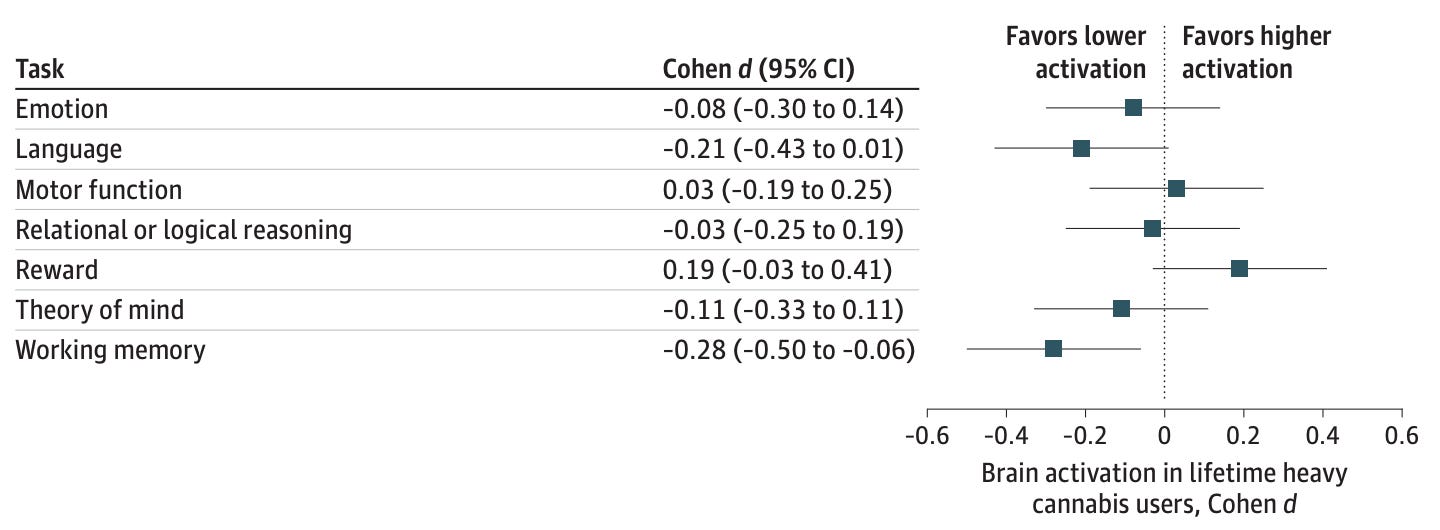
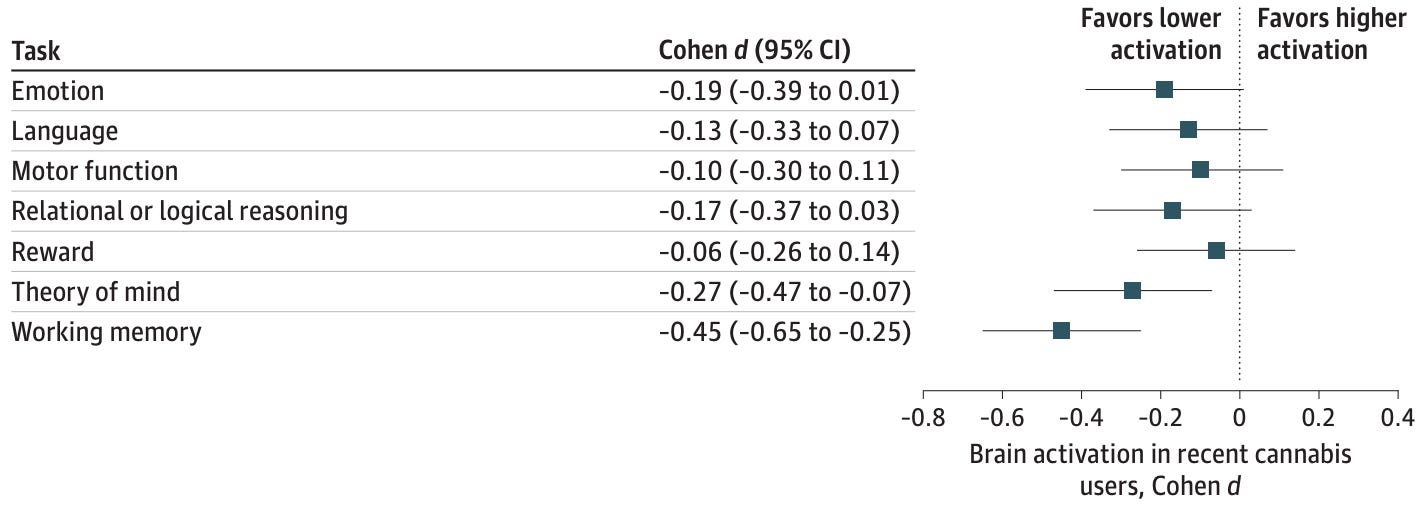
Interestingly, recent cannabis use was also linked to lower brain activity and poorer performance on working memory and motor tasks, though these associations did not remain statistically significant after adjusting for multiple comparisons. The study found no major effects of cannabis use on other cognitive tasks, and a history of cannabis dependence (as defined by DSM-IV criteria) did not appear to correlate with differences in brain activation. This challenges the idea that only individuals with diagnosed cannabis use disorder experience cognitive changes, highlighting that frequent use itself may have measurable neurological consequences.
These findings add to growing evidence that heavy cannabis consumption may alter brain function in ways that persist beyond the immediate intoxication period. The authors emphasize that future research should investigate whether these changes are reversible with long-term abstinence and whether they translate to noticeable impairments in daily cognitive performance. With cannabis potency continuing to rise, understanding its long-term neurological impact remains a critical public health concern.
Support:
These newsletters take a significant amount of effort to put together and are totally for the benefit of the reader. If you find these explorations valuable, there are multiple ways to show your support:
Engage: Like or comment on posts to join the conversation.
Subscribe: Never miss an update by subscribing to the Substack.
Share: Help spread the word by sharing posts with friends directly or on social media.
References:
https://science.nasa.gov/mission/osiris-rex/
https://www.popsci.com/science/bennu-asteroid-sample-mission/
https://www.nature.com/articles/d41586-025-00264-3#:~:text=Not%20only%20does%20Bennu%20contain,left%2Dhanded'%20chemical%20structure.
https://mammoth.bio/
https://egenesisbio.com/press-releases/egenesis-announces-second-patient-successfully-transplanted-with-genetically-engineered-porcine-kidney/
Glavin, D.P., Dworkin, J.P., Alexander, C.M.O.D., Aponte, J.C., Baczynski, A.A., Barnes, J.J., Bechtel, H.A., Berger, E.L., Burton, A.S., Caselli, P. and Chung, A.H., 2025. Abundant ammonia and nitrogen-rich soluble organic matter in samples from asteroid (101955) Bennu. Nature Astronomy, pp.1-12.
Gowin, J.L., Ellingson, J.M., Karoly, H.C., Manza, P., Ross, J.M., Sloan, M.E., Tanabe, J.L. and Volkow, N.D., 2025. Brain Function Outcomes of Recent and Lifetime Cannabis Use. JAMA Network Open, 8(1), pp.e2457069-e2457069.
Rauch, B.J., DeLoughery, A., Sper, R., Chen, S., Yunanda, S., Masnaghetti, M., Chai, N., Lin, J.C., Neckelmann, A., Bjornson, Y. and Espino, D.P., 2025. Single-AAV CRISPR editing of skeletal muscle in non-human primates with NanoCas, an ultracompact nuclease. bioRxiv, pp.2025-01.
Love this one
Article saying anything remotely negative about cannabis? Not in my good libertarian household