


Happy Monday Evening, Readers. Let’s be relentless this week!
Biotech never slows down—there are always fascinating studies and groundbreaking products emerging. This is often faster than I can keep up with. But as 2024 comes to a close and we look ahead to 2025, it’s the perfect time to reset and focus on building better habits.
I know, it’s cliche. At the start of each new year, people say they want to improve their fitness, nutrition, or overall well-being. It’s why the number of new gym memberships in January exceeds the remainder of the year combined. But instead of vaguely aiming to “be healthier,” let’s focus on a few simple habits that can deliver the greatest impact.
So, this week, we’re switching gears. Rather than highlighting the latest futuristic innovations, we’ll explore a couple of studies that offer practical, science-backed tips to improve overall health and quality of life. These are actionable insights—simple steps you can take today to invest in a healthier life. If you choose to.
Let’s dive in!
The punchlines if you don’t want to read:
Walking at least 7,000 steps per day can reduce all-cause mortality by up to 72%!
7 hours of sleep appears to be optimal for cognitive tasks.
Walking is a step in the right direction for longevity!
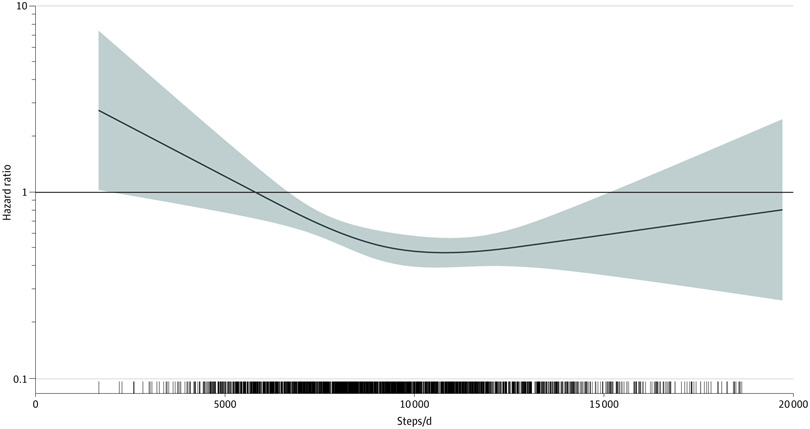
How many steps does it take to live a longer life? A study published in the Journal of American Medical Association (JAMA) suggests it may be fewer than you think. Researchers analyzed data from over 2,100 participants aged 38 to 50 years who wore accelerometers to track their daily steps. The study, which followed participants for nearly 11 years, found a striking correlation between daily step counts and all-cause mortality (Paluch et al., 2021).
Participants taking 7,000 or more steps per day had a significantly lower risk of premature death compared to those taking fewer than 7,000 steps daily. Specifically, moderate step counts (7,000–9,999 steps/day) were associated with a 72% reduced mortality risk, while higher step counts (10,000+ steps/day) reduced the risk by 55%. Interestingly, step intensity—how fast participants walked—did not independently affect mortality, underscoring that simply moving more can have profound health benefits.
The study's findings were consistent across racial and gender groups, making it one of the most inclusive analyses of its kind. Black participants, who on average took fewer steps than White participants, still experienced the same benefits from increasing their daily activity levels. This highlights the importance of encouraging accessible, simple physical activity goals like walking for populations with varying baseline activity levels.
Perhaps most exciting is the accessibility of the intervention. Unlike many fitness goals that demand high-intensity efforts, this study suggests that simply walking more—whether it’s to the grocery store or around your neighborhood—could be a game-changer for longevity. With wearable devices becoming more popular, tracking step counts may become an empowering and practical tool for individuals aiming to improve their health.
As always, while observational studies like this can’t prove causation, the data adds to growing evidence that making small, consistent changes in physical activity can lead to substantial health benefits. So, lace up those sneakers and step into a healthier future!
The Balance of Sleep Duration and Cognition
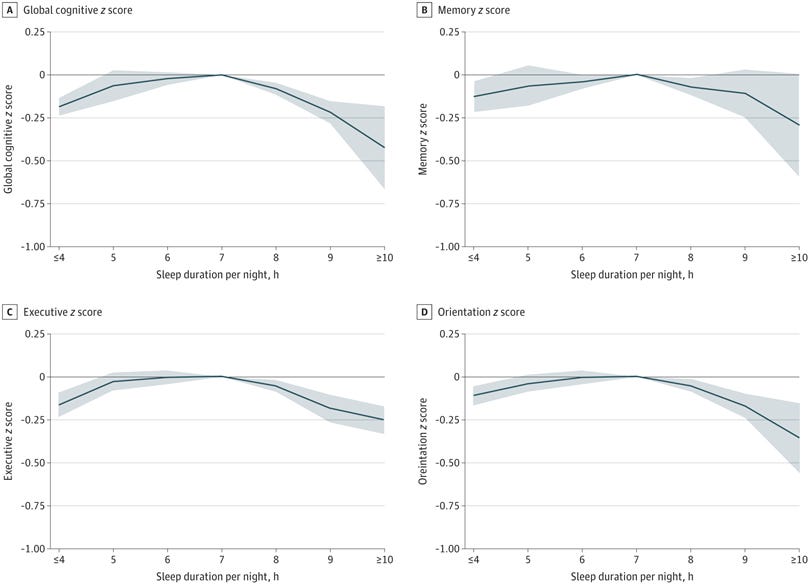
How much sleep is too much—or too little—when it comes to brain health? A pooled cohort study published in JAMA Network Open has shed some light on this question. Analyzing data from over 20,000 participants in England and China, researchers found a surprising "inverted U-shaped" relationship between sleep duration and cognitive decline (Ma et al., 2020).
The study assessed cognitive abilities using tests on memory, executive function, and orientation, tracking changes over nearly 100,000 person-years of follow-up. Unsurprisingly, individuals sleeping fewer than 4 hours per night experienced significantly faster cognitive decline. What’s less expected is that the same was true for those sleeping more than 10 hours. Those who clocked around 7 hours of sleep had the slowest decline, suggesting this may be the "sweet spot" for cognitive health.
What makes these findings particularly compelling is their consistency across two distinct cultural cohorts. Whether in England or China, extremes in sleep duration were associated with worse cognitive outcomes, highlighting the universality of this health marker. Memory was identified as the most affected domain, reinforcing its critical role in the early stages of dementia.
While these findings do not establish causation, they highlight a practical takeaway: balancing sleep is vital for maintaining cognitive health. Short sleep durations may disrupt critical processes like memory consolidation, while excessive sleep could point to underlying health issues such as inflammation or neurodegeneration.
With dementia cases expected to rise globally, understanding modifiable risk factors like sleep could prove invaluable. Future studies may dive deeper into the biological mechanisms, but for now, ensuring a consistent 7 hours of sleep might be one of the simplest steps to safeguard cognitive health.
Support:
These newsletters take a significant amount of effort to put together and are totally for the benefit of the reader. If you find these explorations valuable, there are multiple ways to show your support:
Engage: Like or comment on posts to join the conversation.
Subscribe: Never miss an update by subscribing to the Substack.
Share: Help spread the word by sharing posts with friends directly or on social media.
References
Ma, Y., Liang, L., Zheng, F., Shi, L., Zhong, B. and Xie, W., 2020. Association between sleep duration and cognitive decline. JAMA network open, 3(9), pp.e2013573-e2013573.
Paluch, A.E., Gabriel, K.P., Fulton, J.E., Lewis, C.E., Schreiner, P.J., Sternfeld, B., Sidney, S., Siddique, J., Whitaker, K.M. and Carnethon, M.R., 2021. Steps per day and all-cause mortality in middle-aged adults in the coronary artery risk development in young adults study. JAMA Network Open, 4(9), pp.e2124516-e2124516.
I retired from a cargo airline. Most of the fleets, including mine, were next-day air flights, which by definition had to operate over night. In general the schedules were week on/week off, and that in theory allowed time for recovery--until it was time for the next day/night schedule swap. It didn't matter how tired you were. You could be micro-sleeping on a 5-mile final to the runway. It didn't matter how well you ate or how religiously you exercised. You'd be lucky to get more than four or five hours of sleep each day in the hotel. By Thursday and Friday the sleep debt was so high that it could take 2-3 days to recover once you were home.
They always told us that with respect to motor skills, judgement, and attentiveness, flying tired was equivalent to flying drunk. As with drunkenness, tiredness is very hard to self-assess. And as with drunkenness, the effects are cumulative and make people stupider over time. So here I am: retired and at leisure but reduced to the cognitive bandwidth of a chicken.
Love the info on the sleep study, David. I'm happy to be in the ~6.5-7hrs a night zone myself. :)