

Happy Tuesday Morning, Readers. Let’s be relentless this week!
Here in the United States, the past week has been a whirlwind with a major presidential election that will shape our country’s economic and social policies for the next four years and beyond. This extremely divisive election ended with a definitive result for Donald Trump and the Republican party, involving a clean sweep of the Presidency, Senate, House, and even the popular vote, which some claimed that the Republicans could no longer win with changing demographics. But how did this victory come about, and what does it mean for the future of biotech? We’ll talk about all this and more in a special edition of BioWire Weekly.
How did Donald Trump and Republicans sweep the 2024 election?
Despite predictions from pollsters and political pundits about a close election that was evenly split, the outcome was anything but. Traditional polls had forecasted a close race, but Trump’s decisive victory suggested significant polling inaccuracies. Our prior post, where we used AI to successfully forecast this election outcome, touched on some possible reasons behind these inaccuracies. It appears many polls failed to represent the full electorate accurately, and in some cases, were weighted to align with other polls, creating a “herding” effect. Pollster and statistician Nate Silver highlighted this collective bias in a post here on Substack.
What does this election outcome mean for the biotechnology sector?
Predicting the implications of this on biotech is tough. If this Republican administration reflects previous ones, we could see corporate tax cuts and possible deregulation in select sectors. These changes would likely provide biotech companies with extra resources, potentially boosting research funding and innovation. However, there are additional ways this administration could diverge significantly.
Trump has advocated for trade policies that favor American manufacturing, potentially including tariffs that could affect biotech production costs and supply chains. Additionally, key figures within the Trump coalition, such as Robert F. Kennedy Jr. and Nicole Shanahan, have been vocal critics of current U.S. health and food policies. As proponents of the “Make America Healthy Again” (MAHA) initiative, Kennedy and Shanahan are expected to play influential roles within the administration, likely driving changes in health-related policy that could directly impact the biotech sector. These shifts may include greater scrutiny on food products and additives, as well as a potentially altered stance on vaccines.
In summary, while we’re entering uncertain times, market sentiment remains optimistic. With anticipated regulatory changes, tax adjustments, and health policy shifts, the biotech sector could see both challenges and significant opportunities ahead. Let me know your thoughts on this in the comments below.
Now, onto some other biotech news:
UV exposure surprisingly inhibits the immune systems ability to fight some cancers
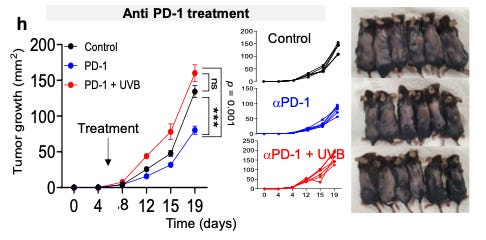
Scientists have uncovered a surprising twist in how our immune system interacts with sunlight, specifically the ultraviolet B (UVB) rays that reach us from the sun. While sunlight has been used for centuries to treat some autoimmune conditions, like psoriasis, this study shows that UVB exposure can also have a downside—it seems to hinder the immune system’s ability to fight certain cancers (Maliah et al., 2024). The researchers found that when skin exposed to UVB light, the immune system became less effective at targeting melanoma, a dangerous skin cancer, due to changes in the behavior of key immune cells called T cells. Notably, the study showed that this UVB effect even made mice resistant to a common cancer treatment, anti-PD1 therapy, which usually boosts T cell activity against tumors (Figure 1).
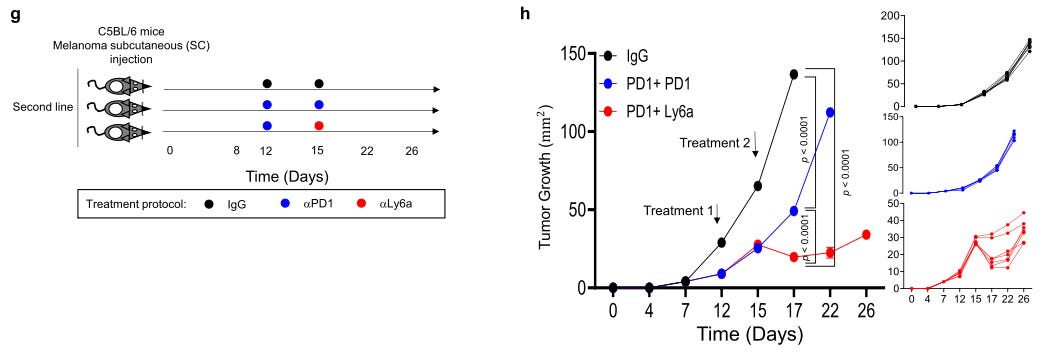
To tackle this issue, the scientists looked closer at the specific immune mechanisms involved. They discovered that UVB exposure triggers an increase in a protein called Ly6a on T cells in the lymph nodes near the skin, which seems to dampen their ability to attack cancer cells. Here’s where the breakthrough happened: when the researchers introduced an antibody targeting Ly6a, it “recharged” the T cells, restoring their energy and ability to kill cancer cells (Figure 2). This antibody didn’t just turn the T cells back on; it also reprogrammed their metabolism, helping them stay active and resilient in the tumor environment.
The impact of this discovery is promising. It opens up the possibility of a new treatment approach for cancer patients whose immune systems don’t respond well to current immunotherapies like anti-PD1. By blocking Ly6a, doctors might one day help the immune system overcome the dampening effects of UVB exposure or other immune-suppressive conditions, potentially giving patients a better chance at beating resistant cancers.
How Science is Bringing an Extinct Zebra Back to Life
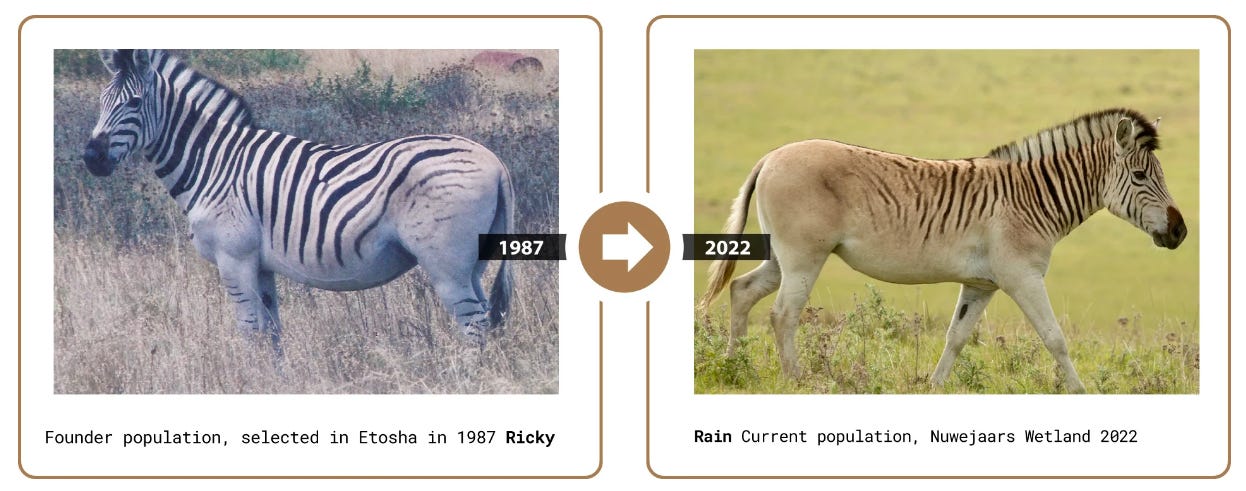
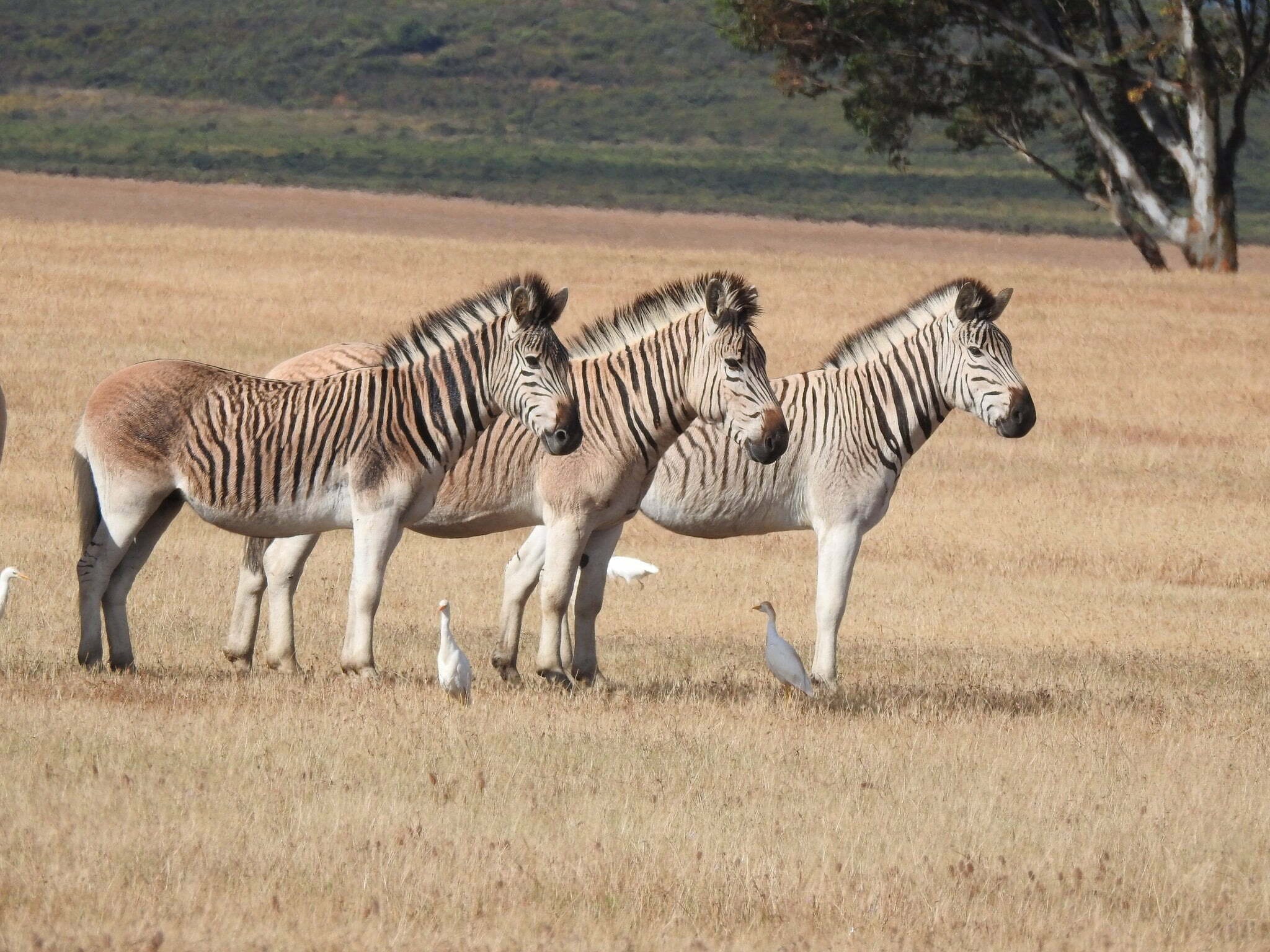
The Quagga Project, an ambitious conservation effort, has sparked both excitement and debate by attempting to “resurrect” the quagga, a zebra relative that once roamed Africa's plains before going extinct in 1883. Instead of using cloning or genetic engineering, researchers relied on selective breeding to recreate the quagga’s distinctive brown coat and partial striping (Figure 3). This approach has led some to call it the “Jurassic Park” of zebras, but critics question if the Rau quagga, as it is now called, is truly a quagga or simply a zebra with fewer stripes. Despite the controversy, ten of these Rau quaggas now roam in a South African preserve, showing just how closely scientists have come to recreating this lost creature’s appearance.
The project, which began in 1987, focused on identifying genetic similarities between the quagga and the Southern Plains Zebra, a sparsely striped relative. By analyzing the DNA from a preserved quagga foal, researchers discovered that selective breeding could effectively recreate the quagga’s unique appearance. However, this feat has not been without obstacles, with each generation taking years to breed and facing challenges in maintaining genetic diversity. Critics argue that the Rau quagga’s resemblance to its extinct counterpart is only skin-deep. Evolution expert Douglas McCauley commented that “they’re effectively just making a zebra less stripey,” dismissing the quagga’s return as a superficial knockoff rather than a true resurrection.
Still, the effort holds valuable lessons for conservation. Even if the Rau quagga isn’t genetically identical to the original, its selective rebreeding provides a potential model for preserving endangered species. Sequencing the Rau quagga’s genome may reveal insights that go beyond satisfying scientific curiosity, suggesting strategies to support threatened animal populations. According to Peter Heywood, a biology professor emeritus at Brown University, the Rau quagga “symbolizes hope” and may help researchers rebuild species that are on the brink of extinction, adding another tool to the field of biodiversity conservation.
Moderna-Powered Macrophage Therapy Shows Promise in Shrinking Tumors in Preclinical Trials
A promising new cancer treatment is taking shape through a collaboration between Carisma Therapeutics and Moderna. The companies have developed an innovative in vivo therapy that uses engineered immune cells called macrophages to target and destroy solid tumors. Their approach, known as CAR-M, has shown encouraging results in preclinical trials: weekly doses of the therapy successfully shrank lung and liver tumors in mice, according to data presented at the Society for Immunotherapy of Cancer meeting in Houston on November 8.
The core of CAR-M therapy is Moderna’s lipid nanoparticle (LNP) technology, which delivers mRNA instructions directly into macrophages while they’re still inside the body. This mRNA equips the macrophages with a chimeric antigen receptor (CAR) that targets glypican-3 (GPC3), a protein commonly associated with liver cancer. These "reprogrammed" macrophages, now armed with the GPC3 antigen receptor, can locate and destroy cancer cells, bypassing some of the limitations of conventional CAR-T therapies, which use T cells that struggle to combat solid tumors.
Carisma’s CAR-M therapy also addresses another significant challenge of conventional cell therapies: the labor-intensive and costly process of modifying a patient’s cells outside the body before reinfusing them. Unlike these autologous treatments, which require individual patient cells, Carisma and Moderna’s mRNA approach enables direct in vivo delivery, offering a scalable and less costly alternative. This off-the-shelf solution could make cancer cell therapies more accessible and efficient, paving the way for broader clinical application and a potential new avenue in treating solid tumors like liver cancer.
Support:
These newsletters take a significant amount of effort to put together and are totally for the benefit of the reader. If you find these explorations valuable, there are multiple ways to show your support:
Engage: Like or comment on posts to join the conversation.
Subscribe: Never miss an update by subscribing to the Substack.
Share: Help spread the word by sharing posts with friends directly or on social media.
References
https://www.quaggaproject.org/
https://www.wsj.com/science/biology/quagga-woolly-mammoth-extinct-zebra-africa-dabce258
https://www.prnewswire.com/news-releases/carisma-unveils-promising-pre-clinical-data-on-anti-gpc3-in-vivo-car-m-therapy-for-hepatocellular-carcinoma-302299179.html
Maliah, A., Santana-Magal, N., Parikh, S., Gordon, S., Reshef, K., Sade, Y., Khateeb, A., Richter, A., Gutwillig, A., Parikh, R. and Golan, T., 2024. Crosslinking of Ly6a metabolically reprograms CD8 T cells for cancer immunotherapy. Nature Communications, 15(1), p.8354.
I love the idea of restoring quaggas, but McCauley's right: It's a less-stripey zebra. If they're going to all that trouble, why not make the real thing? Rau quaggas look cool, but genetically they're zebras. Wouldn't the same collateral conservation benefits apply if they made actual quaggas?
"as well as a potentially altered stance on vaccines."
Hrgggh. This is what worries me about RFK.
Anyway, politics aside, thanks for another newsletter, David. The UV work was interesting to see.