

Happy Monday! Let’s be relentless this week.
I have a few interesting pieces of Biotech News to share with you all. These news briefs include applications of AI in medicine and drug development, a newly approved Parkinson’s treatment, the positive impacts of a ketogenic diet on mental illness, and a new antiviral CRISPR tool. Let me know what you think in the comments below.
AI Surpasses Pathologists in Pinpointing Origins of Metastatic Cancers
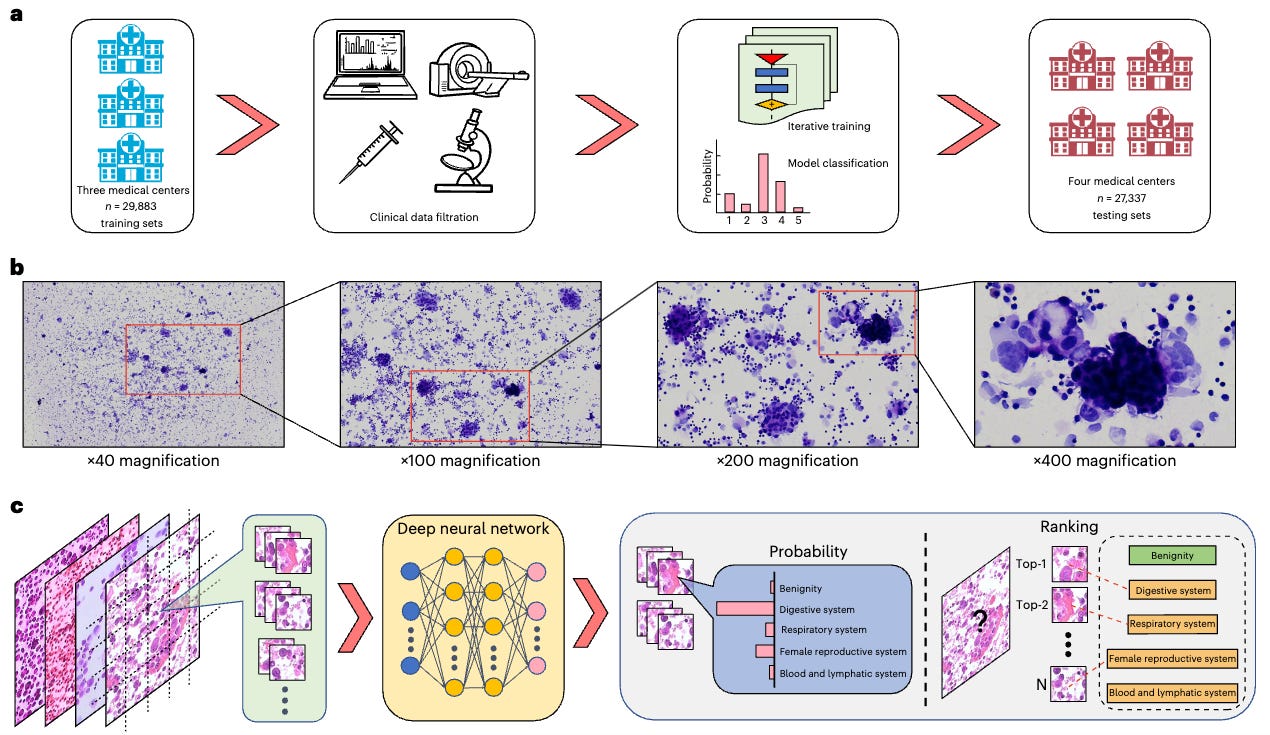
Scientists have developed an AI tool that surpasses human pathologists in identifying the origins of metastatic cancers (Tian et al, 2024). Often, secondary tumors are only detected after spreading to distant organs. This AI system, trained on 30,000 cell images from known tumor sources, can predict the primary cancer source with high accuracy, providing the top three likely origins in 99% of cases. The application of this technology could significantly reduce the need for invasive tests while enhancing diagnosis and treatment strategies for late-stage cancers. The study, Published in Nature Medicine, also showed that patients treated for the type of cancer predicted by the AI had higher survival rates, highlighting the tool's potential in clinical settings.
AI-Created Drug for Lung Disease Enters Phase II Trials in US and China
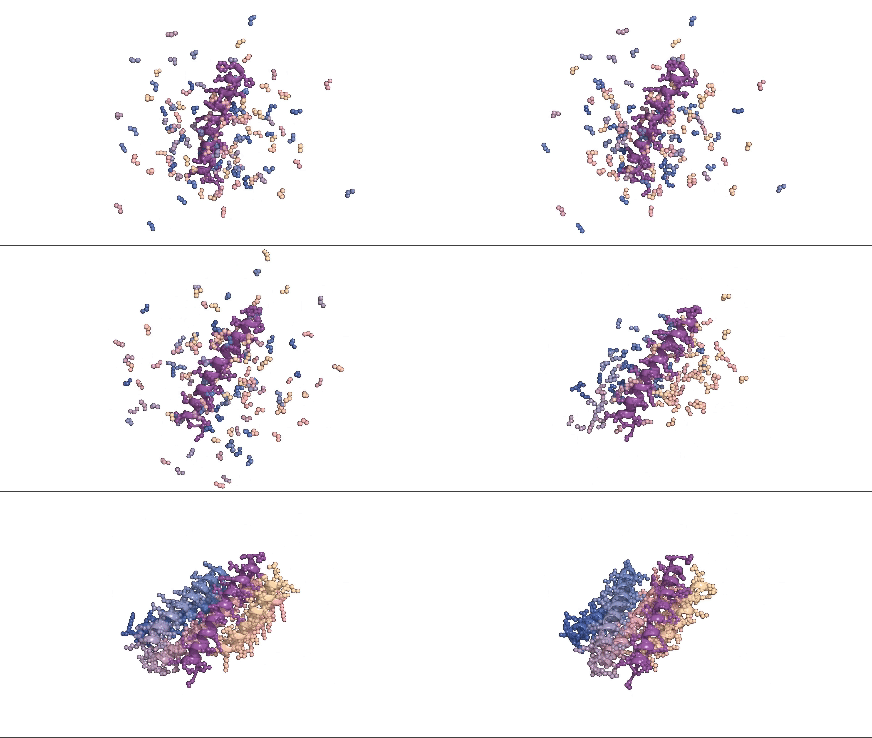
The world's first AI-created drug for treating Idiopathic Pulmonary Fibrosis (IPF) has progressed to Phase II clinical trials in both the U.S. and China. Developed by Insilico Medicine using generative AI, this drug aims to provide a new therapeutic option for a disease that impacts up to 20 individuals per 100,000 and incurs significant medical costs annually. The Phase II trials, involving 60 patients in each country, are focused on assessing the drug's efficacy and safety, building on favorable Phase I results that demonstrated good tolerance and safety profiles (Ren et al, 2024). This marks a significant advancement in AI-driven drug discovery, which I will be dedicating a full deep dive to in the near future.
New Parkinson’s treatment Tavapadon is a huge win for AbbVie following Cerevel Acquisition
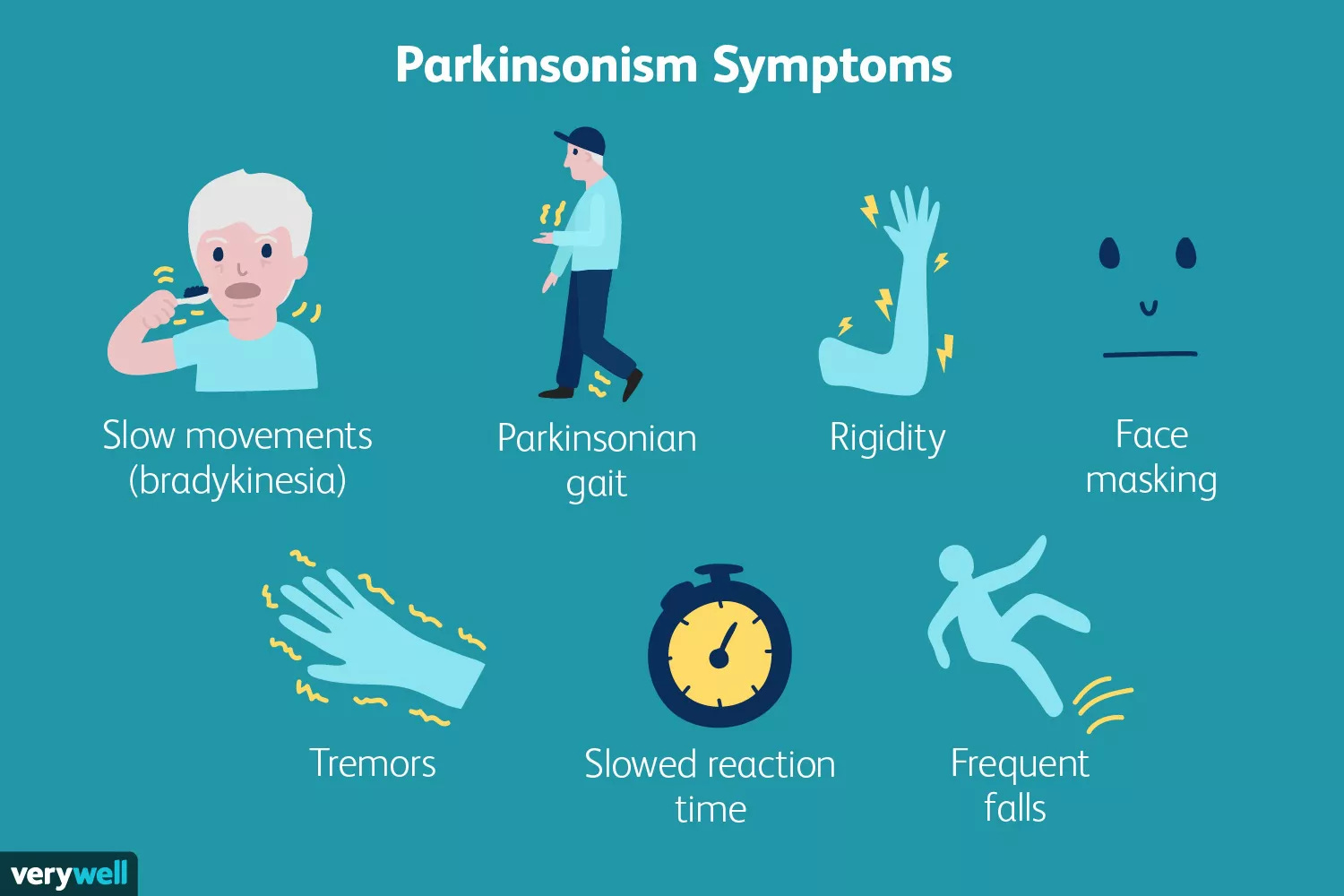
Tavapadon is a promising new treatment for Parkinson's disease and has recently garnered significant attention following successful phase 3 trials. For readers unfamiliar with Parkinson’s, it is a neurological disorder that causes uncontrolled and involuntary movements. This once-daily oral medication acts as a dopamine D1/D5 receptor partial agonist, effectively reducing these involuntary movements. Those treated with Tavapadon reported fewer symptoms and better motor control for extended periods compared to their counterparts receiving a placebo. This breakthrough comes as part of AbbVie's $8.7 billion acquisition of Cerevel Therapeutics, a deal originally centered on Emraclidine, a mid-phase schizophrenia drug. While Emraclidine was the initial focus, Tavapadon's trial successes highlight its potential as a valuable addition to AbbVie's neuroscience portfolio.
Ketogenic diet improves severe mental illness

A pilot study by Stanford Medicine researchers shows that a ketogenic diet helped patients with schizophrenia or bipolar disorder. This study, published in Psychiatry Research focuses on those experiencing side effects from antipsychotic medications (Sethi et al, 2024). The keto diet (typically low in carbohydrates and high in fats) markedly improved metabolic health, eliminating metabolic syndrome in all participants. It also led to significant psychiatric improvements. Participants reported higher energy levels, better sleep quality, improved mood, and increased life satisfaction. These results suggest that dietary changes can effectively complement traditional medication, offering a new therapeutic avenue. Lead researcher Shebani Sethi, MD, calls this approach 'metabolic psychiatry.' It aims to use diet to affect brain metabolism and overall health, paving the way for future large-scale studies.
Innovative antiviral defense with new CRISPR tool
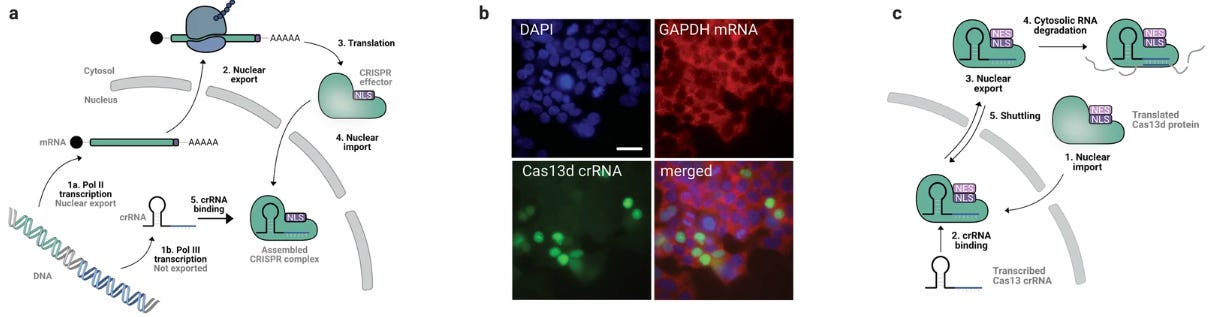
Researchers have developed a new version of the CRISPR/Cas13 system, named Cas13d-NCS, that enhances its effectiveness against RNA viruses by enabling the transport of CRISPR RNA (crRNA) from the nucleus to the cytoplasm (Gruber et al, 2024). This advancement allows Cas13d-NCS to effectively target and degrade RNA viruses like SARS-CoV-2, which replicate in the cytoplasm, overcoming previous limitations where Cas13d was only active in the nucleus. By fusing Cas13d with both nuclear localization and export sequences, this modified system can shuttle crRNAs to the cytoplasm where they can be effective. This development significantly improves the system's antiviral capabilities, offering potential as a highly precise antiviral therapy.
References:
Gruber, C., Krautner, L., Bergant, V., Grass, V., Ma, Z., Rheinemann, L., Krus, A., Reinhardt, F., Mazneykova, L., Rocha-Hasler, M. and Truong, D.J.J., 2024. Engineered, nucleocytoplasmic shuttling Cas13d enables highly efficient cytosolic RNA targeting. Cell Discovery, 10(1), p.42.
Ren, F., Aliper, A., Chen, J., Zhao, H., Rao, S., Kuppe, C., Ozerov, I.V., Zhang, M., Witte, K., Kruse, C. and Aladinskiy, V., 2024. A small-molecule TNIK inhibitor targets fibrosis in preclinical and clinical models. Nature Biotechnology, pp.1-13.
Sethi, S., Wakeham, D., Ketter, T., Hooshmand, F., Bjornstad, J., Richards, B., Westman, E., Krauss, R.M. and Saslow, L., 2024. Ketogenic Diet Intervention on Metabolic and Psychiatric Health in Bipolar and Schizophrenia: A Pilot Trial. Psychiatry research, 335, p.115866.
Tian, F., Liu, D., Wei, N., Fu, Q., Sun, L., Liu, W., Sui, X., Tian, K., Nemeth, G., Feng, J. and Xu, J., 2024. Prediction of tumor origin in cancers of unknown primary origin with cytology-based deep learning. Nature Medicine, pp.1-11.
https://www.fiercebiotech.com/biotech/abbvie-bound-cerevel-reports-phase-3-parkinsons-victory-early-win-87b-deal
Out of frustration I started a keto diet last June. I wasn't frustrated enough to actually exercise, but even so I lost 30 lbs and my blood pressure's in the 120/76 range now. There are no blood sugar highs and lows so I almost never feel hungry, and I usually eat just once a day. That cut down my grocery bill, too. I try not to eat a lot of fats even though they're allowed, but it's nice to air fry some chicken and be able to leave the skin on. I still crave Maurice Lennell pinwheel icebox cookies, but since the company went out of business there's no risk of relapsing.
As for the AI, it's great that someone's putting it to constructive use, but the developers really need to work on making it useful to me personally. Otherwise, what's the point? I spent a couple of weeks working with two different design studios who showcase their AI images on Instagram and Patreon, trying to generate images of the two lead characters in my book. The tech that can find cancer can't produce an image of a specific fictional person and then reproduce him from different angles and place him in different scenes. Oh, sure, you can tell it, "Hot guy, no shirt, overalls, cornfield" and it does okay, but a picture of some rando doesn't do me any good. Apparently my dream of making my own book into my own AI movie won't be realized until after I'm dead.
Great summary, David.
Always found the effects of a keto diet quite fascinating, especially its history in treating epilepsy/seizures.
Love the antibody chip artwork by DALL.E.
Thanks for providing the hyperlinks for the papers.