


Advanced robotics and machine learning are accelerating new drug development from computer, to lab, to clinic in biotech.
Late last year, I published a deep dive here on Substack, digging into the stagnation and price disease gripping traditional biopharma, its causes, consequences, and how artificial intelligence could break the deadlock (you can view here or linked below). A core part of that thesis revolved around generative AI’s promise to design potent new drugs entirely within the digital world, eliminating a significant portion of the R&D bottleneck inherent in traditional screening methods. One of the case studies featured in the article was Insilico Medicine, a pioneering biotech startup leveraging AI in drug discovery.
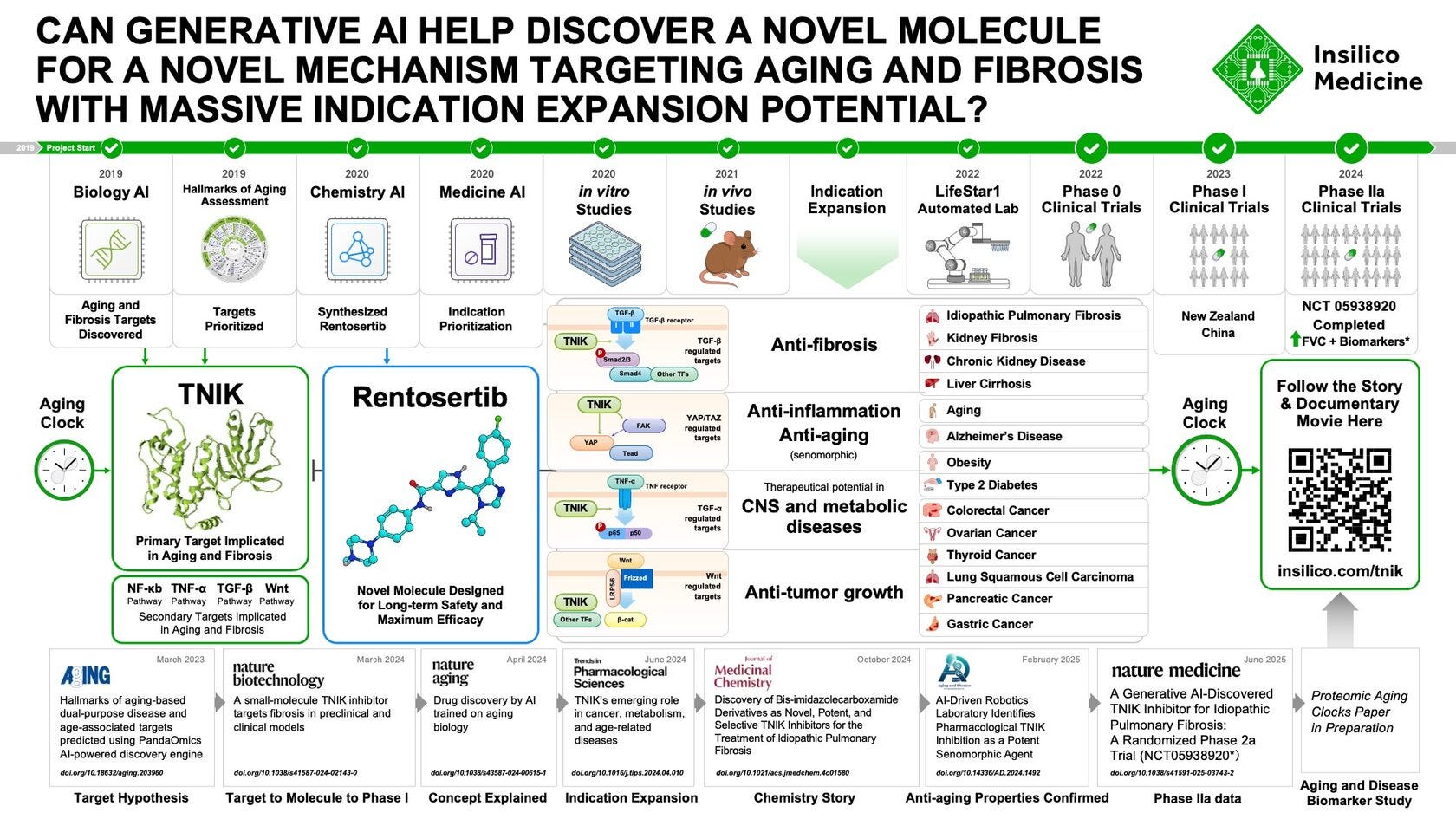
Well, less than 1 year later, Insilico’s flagship AI-designed drug just officially cleared its Phase 2a clinical trial, delivering promising results that might validate the entire AI-first approach. Let’s unpack the findings and explore why they matter.

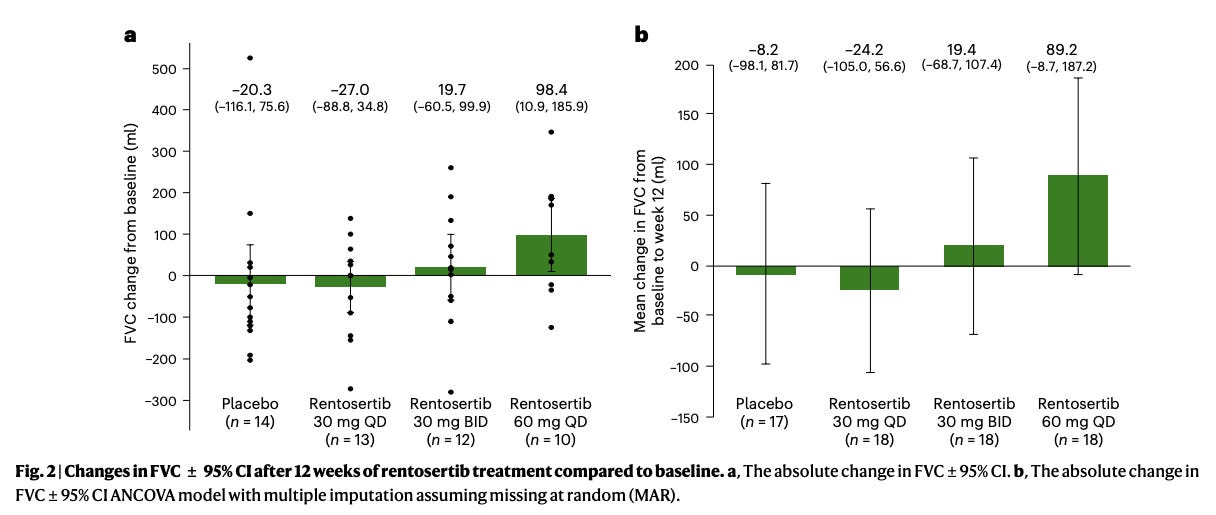
An AI-discovered drug just achieved an important milestone in medicine! The therapeutic molecule designed using generative AI has shown positive results in patients through Phase 2a testing. The drug, called Rentosertib (formerly ISM001-055), was developed by Insilico Medicine to treat idiopathic pulmonary fibrosis (IPF), a deadly lung disease with few options. In a mid-stage clinical trial, IPF patients taking Rentosertib experienced improved lung function (on average, gaining ~98 milliliters in lung capacity), whereas those on placebo continued to decline. Equally important, the AI-designed drug was found to be safe and well-tolerated in the study. This success is an important validation that AI-driven drug discovery can deliver a viable treatment to the clinic, offering an early look at how artificial intelligence might revolutionize healthcare.
A bit about the disease and product.
Idiopathic Pulmonary Fibrosis is a chronic, scarring lung disease that gradually robs patients of the ability to breathe. Roughly 5 million people worldwide suffer from IPF, which carries a grim prognosis: a median survival of only 3–4 years. Current medicines can slow the disease’s progression but cannot halt or reverse it. Rentosertib is changing that. Discovered by AI algorithms searching for novel treatment targets, Rentosertib blocks a protein called TNIK, believed to drive lung fibrosis. By hitting this new target, the drug hopes to halt or even reverse the scarring process in IPF, something no existing therapy can do. The early trial results, albeit in just 71 patients over 3 months, show evidence that Rentosertib might indeed modify the disease, as high-dose patients showed a small improvement in lung function while untreated patients got worse. It’s a tentative sign of efficacy in a condition that is typically relentlessly downhill.
Why It Matters
Faster Drug Discovery: This AI-designed drug moved from computer model to human trials in a fraction of the usual time. Insilico’s AI platform churned out drug candidates in just 12–18 months, versus the 2.5–4 years traditional R&D often takes. By testing far fewer molecules in the lab (hundreds instead of thousands), AI can accelerate development. Faster discovery means patients might get new treatments years earlier than normal.
New Targets for Tough Diseases: AI doesn’t rely on conventional wisdom, it can uncover hidden biological targets. Rentosertib’s target (TNIK) was identified by AI as a key player in fibrosis, even though it wasn’t a usual focus for IPF. This suggests that AI can point researchers to novel drug targets that humans might overlook, critical for diseases like IPF, where past drugs only slowed decline.
Boosting Innovation in Pharma: A confirmed success in an AI-developed drug will encourage the entire biotech industry to embrace these tools. Large pharma companies may increase partnerships with AI startups, invest in machine learning for R&D, and broaden the search space for cures. The Rentosertib trial is a proof-of-concept showing that AI can deliver real drugs to real patients.
The early success of an AI-designed drug like Rentosertib is optimistic news for both biotechnology and medicine. While larger trials are still needed to confirm its benefits, this achievement is an immediate impact of generativee AI. We are witnessing the beginning of an era where algorithms and researchers work hand-in-hand, turning scientific ideas into real treatments faster than ever before. Today it’s a lung fibrosis drug; tomorrow, AI might help conquer cancers, neurodegenerative disorders, or diseases that have long eluded cures. We could be in the beginning of a Renaissance in drug discovery and healthcare.
These newsletters take significant effort to put together and are totally for the reader's benefit. If you find these explorations valuable, there are multiple ways to show your support:
Engage: Like or comment on posts to join the conversation.
Subscribe: Never miss an update by subscribing to the Substack.
Share: Help spread the word by sharing posts with friends directly or on social media.
References:
https://insilico.com/tpost/tnrecuxsc1-insilico-announces-nature-medicine-publi#:~:text=Idiopathic%20Pulmonary%20Fibrosis%20,modifying%20therapies
Xu, Z., Ren, F., Wang, P., Cao, J., Tan, C., Ma, D., Zhao, L., Dai, J., Ding, Y., Fang, H. and Li, H., 2025. A generative AI-discovered TNIK inhibitor for idiopathic pulmonary fibrosis: a randomized phase 2a trial. Nature Medicine, pp.1-9.
https://open.substack.com/pub/drfredpower/p/substack-article-1-the-common-cold?r=642fua&utm_campaign=post&utm_medium=web&showWelcomeOnShare=true