

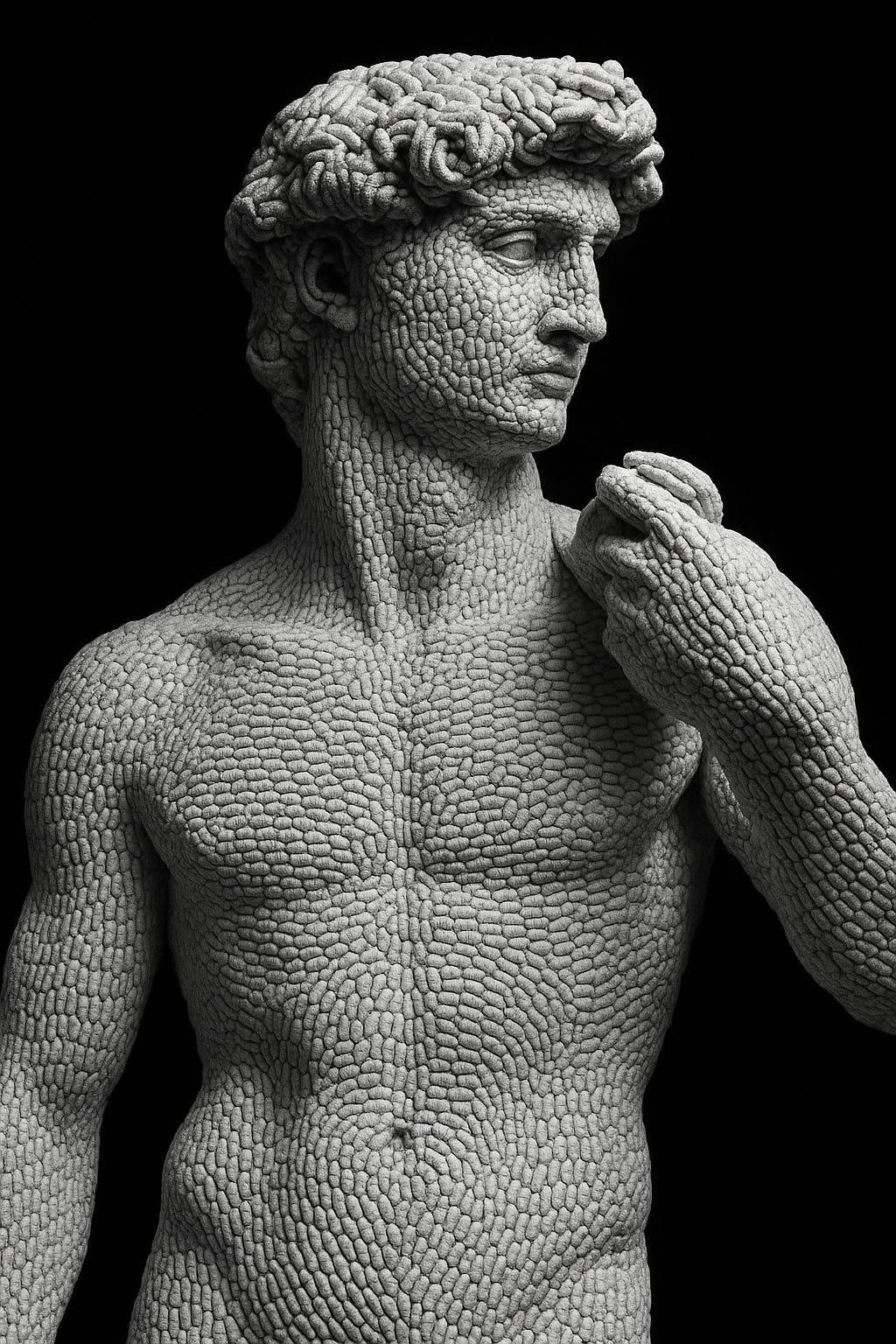
Kidney molecule betaine mimics workout benefits for healthy aging
It’s become quite obvious that regular exercise is a cornerstone of healthy aging. A significant component of this is related to exercises positive effect on body composition, which is one of the best predictors of all-cause mortality (Lee et al., 2018). But it’s also believed there are biochemical effects triggered by exercise. But what is happening in the body after exercise to achieve this effect? As a follow-up, if what’s happening can be identified, could you bottle the effects?
It sounds a bit like science fiction (what else is new), right? But a new six-year study just published in Cell by Geng and colleagues might be on the verge of making some critical discoveries here (Geng et al., 2025). The researchers systematically mapped what happens in our bodies when we exercise, and they spotlighted at least one key metabolite as a star performer, betaine. This kidney-produced molecule surged in the bloodstream after sustained training and turned out to mimic many anti-aging effects of workouts. Could betaine be an “exercise mimetic” – essentially, exercise in a pill? There’s some interesting evidence that this may be the case.
Of course, it’s doubtful that anything can entirely replace hitting the gym and breaking a sweat. But these findings suggest we may have another product to boost longevity and a supplement for both healthy and unhealthy individuals. Here, we’ll unpack the highlights of the study: how a multi-omics approach systematically assessed exercise’s biochemical effects, how betaine steps in as a critical molecular messenger, and why blocking an obscure enzyme (TBK1) might be an important lever for turning back the clock on aging. It’s a complex story, but one with a simple takeaway – there’s another new interesting target for longevity, and chasing this target down may mean a future “exercise pill”.
First, if you enjoy these updates, consider subscribing and becoming a part of our growing community!
The 6-Year “Omics” Marathon
To crack the secret of “exercise as medicine,” scientists in Beijing orchestrated a unique trial. Thirteen healthy young men volunteered for a comprehensive analysis involving multi-omics profiling – essentially a multi-layered molecular map of their bodies’ response to exercise. They first spent 45 days in a sedentary baseline, then did a single 5 km run (capturing the shock of acute exercise), and finally completed 25 days of daily 5 km runs (mimicking sustained training). Along the way, the team drew blood, sampled microbiomes, and even did single-cell analyses of immune cells. Think of it as the most detailed check-up an exercise regimen ever got.
The results illuminated an “exercise paradox.” After that first acute run, the body’s internal signals looked a bit like chaos, a spike in inflammatory markers and metabolic stress hormones coursed through the blood. In scientific terms, a hard workout initially throws the body off balance with a significant inflammatory response. But contrast that with the long-term training, after weeks of regular running, those same markers began to normalize and beneficial changes took hold. The men’s bodies reestablished homeostasis, but at a healthier set-point. Inflammatory cytokines like TNF-α receded, antioxidant defenses rose, and the immune system shifted toward a more youthful profile (more naive T cells, fewer exhausted “aged” T cells). In essence, the initial stress of exercise gave way to an adaptation – the body’s systems rebuilt themselves to be more resilient than before. This confirms what health gurus have long said: the first workout might be the hardest. The multi-omics approach provided the data to back that up, linking changes across transcripts, proteins, metabolites, and gut microbes into one coherent picture.
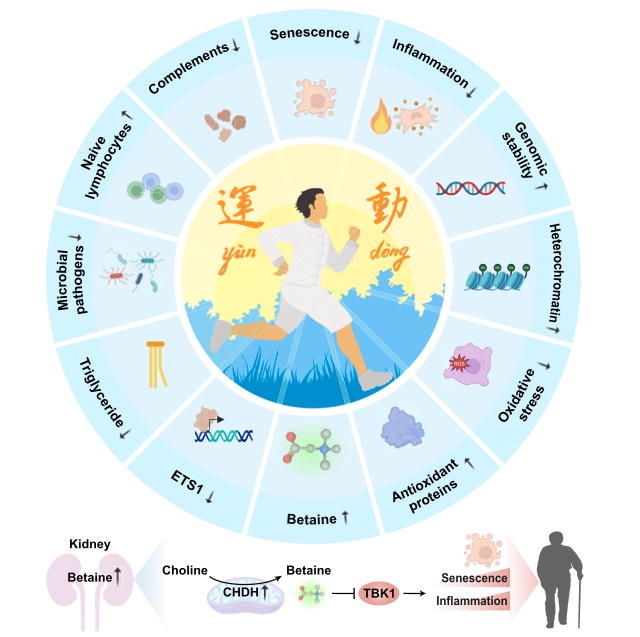
Crucially, amidst the many molecular changes, one organ unexpectedly grabbed center stage: the kidneys. The data pointed to the kidneys as a command center for exercise’s whole-body benefits. It turns out our kidneys do more than filter blood – during long-term exercise, they massively ramp up production of betaine, a metabolic byproduct of choline. This was a eureka moment for the team. They discovered that repeated exercise triggers a surge of betaine made in the renal cortex, something a single run alone doesn’t do. In fact, betaine levels in the blood climbed in step with the number of training days, almost like a molecular odometer for exercise duration. By the end of the 25-day regimen, circulating betaine was markedly higher. The researchers hypothesized that the kidneys were churning it out as a systemic signal of “we’re in training mode.” If true, the identification of a kidney-to-body messenger would help answer a longstanding question: how does exercise talk to distant organs to slow aging?
Perhaps betaine is that messenger.
Betaine, The Kidney’s Workout Messenger
Betaine (chemically known as trimethylglycine) isn’t a new molecule to biologists, it’s found in foods like beets and spinach and helps cells manage osmotic stress. But its emerging role in exercise was unexpected. The study found that long-term exercise flips a genetic switch in kidney cells, an enzyme called CHDH (choline dehydrogenase) is ramped up, converting more choline into betaine. In plain English, the kidneys become betaine factories during endurance training. This flood of betaine into circulation turned out to be more than just a metabolic quirk; it was a feature, not a bug, of the trained state. Geng et al. report that exercise-driven betaine enrichment (partly via this renal biosynthesis) had direct geroprotective effects. In other words, betaine was actively helping to rejuvenate cells and tissues, essentially acting as an exercise signal to the rest of the body.
How does one little metabolite cause such widespread effects? To answer this, the researchers went a step further. They gave betaine a persona: what if betaine itself is an “exercise hormone” of sorts, telling organs to gear up their anti-aging defenses? By profiling where betaine goes and what it binds to, they found a big clue. Betaine accumulated in many tissues of exercising mice, especially kidney (no surprise), but also liver, lung, and muscle, suggesting it could act locally in those organs. Indeed, gene expression in those tissues showed a distinctive pattern: pathways related to stress resistance and metabolism were upregulated, much like in the human exercisers. Maybe little molecule was carrying a big message: “adapt and thrive.”
Blocking the “Inflammaging” Switch – Betaine vs. TBK1
The story continued to get more interesting when the team dug into how exactly betaine confers anti-aging protection. Their detective work zeroed in on a protein called TBK1 (TANK-binding kinase 1). Now, unless you’re an immunologist, TBK1 might sound like alphabet soup. But it’s essentially a master control knob for inflammation and cellular stress – a key driver of the chronic, low-grade inflammation that accompanies aging (sometimes dubbed “inflammaging”). Strikingly, betaine molecules were found to bind directly to TBK1 and shut it down. This is a big deal! By inhibiting TBK1, betaine effectively puts a damper on the NF-κB and IRF3 signaling pathways, molecules that trigger inflammation throughout the body.
In cell culture experiments, adding betaine led to notably lower levels of inflammatory cytokines like TNF-α and IL-6, and reduced activity of genes linked to cellular senescence. The authors claimed, essentially, betaine hit the brakes on the very processes that make our cells old. No wonder the authors describe betaine as operating as a potent inhibitor of inflammatory and aging-related pathways. By targeting TBK1, betaine seems to intercept aging at one of its sources: the pro-inflammatory feedback loops that damage tissues over time. As a bonus, the study also noted betaine helps stabilize our genetic material – it boosted markers of genomic stability and heterochromatin maintenance, which are fancy terms for keeping DNA tidy and tightly packaged, a hallmark of younger cells. It’s as if regular exercise, via betaine, not only puts out small fires (inflammation) but also shores up the infrastructure (genome integrity) to prevent new damage.
The TBK1 connection is particularly intriguing because it opens a new therapeutic target. Drugs that mimic betaine or inhibit TBK1 could potentially treat age-related inflammatory diseases. In fact, the authors suggest that TBK1’s role in aging makes it a target worth watching for conditions like Alzheimer’s or heart disease, where inflammation and cellular senescence play a role. But betaine itself has a leg up: it’s a naturally occurring compound and already used in certain nutritional supplements, meaning it might be closer to safe human use than a novel drug.
Can Betaine Supplementation Teach Old Mice, New Tricks?
Laboratory mice aren’t known for hitting the gym, but what if we give them a dose of betaine? The researchers did exactly that, testing whether betaine supplementation in aged mice could copy the benefits of exercise. The outcomes seemed to be a list of subtle, yet significant, anti-aging effects in these lab mice. What are some of those highlights for when old mice drank betaine-spiked water:
Stronger bodies: Treated old mice showed improved kidney function (higher creatinine clearance) and better metabolic health, akin to their youth. They even performed better on physical tests, hanging longer on a rod and gripping slightly stronger, indicating enhanced muscle endurance. Balance and coordination got a boost too, with betaine-fed mice doing better on tests of motor function.
Sharper minds and moods: Cognitive tests (like a maze) suggested memory and learning improved – betaine-treated mice explored more, as if their brain aging was partially reversed. Even their behavior hinted at a happier state, with reduced depression-like symptoms (yes, mice have tests for this!) – the betaine group was less prone to despair in forced swim and other behavioral assays.
Younger cells: On a cellular level, betaine dramatically reduced markers of aging in tissues. Organs like the liver, lungs, and kidneys had fewer senescent “zombie” cells and less DNA damage. Inflammatory damage was tamped down too, treated mice had far less immune-cell infiltration in organs and less oxidative damage to molecules. Even age-related tissue decline was slowed: their livers accumulated fewer fat deposits (less “old-age” fatty liver), their skin thickness improved (a sign of skin cell vitality), and their muscles had larger fibers, as if rejuvenated.

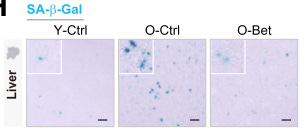
Old mice with betaine water effectively turned back the clock in their body functions and tissues. The images above show liver cells from an untreated 24-month-old mouse (left) versus a betaine-treated peer (right). Red-stained blobs are fat deposits (a hallmark of “fatty liver” in aging); the betaine mouse’s liver is far leaner and healthier.
Overall, giving betaine to elderly mice mimicked many benefits of long-term exercise. It wasn’t just one organ or one parameter; it was a systemic effect, spanning from improved organ function and physical performance to molecular hallmarks of youth. It’s important to note that these mice didn’t exercise more than normal – the betaine largely acted as an exercise substitute. As the researchers put it, betaine “rescued” age-related declines across multiple organs. Importantly, no obvious adverse effects were noted in the mice, they drank normally, ate normally, and their basic health metrics were unchanged except for the better aging outcomes. That suggests betaine was not only effective but also safe in these animal trials.
Toward an “Exercise-in-a-Pill” Future
It’s rare to see such optimism in an aging study, but the betaine findings are genuinely exciting. One co-author remarked that this work “redefines ‘exercise as medicine’”. Betaine is emerging as a leading candidate for an “exercise mimetic” – a compound that can trigger exercise-like benefits without physical exertion. This could be a game-changer for people who cannot exercise due to mobility issues, injury, or illness. Imagine an elderly patient, too frail for vigorous exercise, taking a supplement that helps guard their organs against aging and inflammation, a kind of “lazy bonus” for healthy aging. The authors specifically highlight betaine’s potential for mobility-limited individuals, given its apparent safety and broad efficacy.
That said, no one is suggesting we should all quit the gym and pop betaine pills with our donuts. There’s a lot we don’t know yet. The human data in this study came from just 13 young men, and there has been no supplementation testing yet in humans to see if there is geroprotective effects. There’s also the question of dosage and timing: How much betaine is needed to mimic exercise? Moreover, is there a benefit to super physiological dosing, even in healthy individuals? This would be quite amazing.
Nevertheless, it provides a tangible target for new therapies, for instance, drugs that boost betaine production or activity, or direct TBK1 inhibitors that achieve a similar effect of dampening “inflammaging.” Even beyond betaine, the rich multi-omic data from this project (courtesy of the NIH-funded MoTrPAC consortium) will fuel research for years, as scientists comb through the molecular “signature” of exercise to find other gems.
In the grander scheme, this work reinforces a wonderfully optimistic point: our bodies already have potent anti-aging programs (triggered by healthy behaviors like exercise), and we are getting better at understanding and harnessing those programs. An exercise pill – or more realistically, an exercise-mimicking supplement – won’t make the hard work of staying active obsolete, but it could help more people enjoy the health span boost that exercise provides. Or perhaps give an added bonus to those already exercising.
As the saying goes, “if exercise could be packaged in a pill, it would be the most widely prescribed medicine.” We’re now a step closer to that reality, and betaine might just be the first ingredient on the label.
These newsletters take significant effort to put together and are totally for the reader's benefit. If you find these explorations valuable, there are multiple ways to show your support:
Engage: Like or comment on posts to join the conversation.
Subscribe: Never miss an update by subscribing to the Substack.
Share: Help spread the word by sharing posts with friends directly or on social media.
References:
Geng, L., Ping, J., Wu, R., Yan, H., Zhang, H., Zhuang, Y., Ning, T., Wang, J., Liang, C., Zhang, J. and Chu, Q., 2025. Systematic profiling reveals betaine as an exercise mimetic for geroprotection. Cell.
Lee, D. H., Keum, N., Hu, F. B., Orav, E. J., Rimm, E. B., Willett, W. C., & Giovannucci, E. L. (2018). Predicted lean body mass, fat mass, and all cause and cause specific mortality in men: prospective US cohort study. bmj, 362.
https://www.eurekalert.org/news-releases/1089007
can’t wait for my vitamins to do squats & deadlifts for me… my type of workout lol
A fascinated read indeed! But aa a fitness trainer and someone who's been lifting for four years. I think the euphoric feeling of a workout is something my clients enjoy that just popping pills. But sure, if betaine is great, I'd take it, but also work out